Exciting news at the Greeny Flat experiment this week! We just got our electricity bill for the last three months and the total came to $89.51 which works out to $0.98c/day! And that was for the worst three months of the year (June, July, and August).
If you look at our bill below, on the left hand side you will see that our home used 329kWh for the 91 day period. Next to that it shows that the average usage for a home with two people is 1465kWh. So we are using less that a quarter of the average amount of electricity for similar homes in our area. And that doesn’t even factor in what we produced from our solar panels. On the second page it shows that we exported a total of 823kWh from our PV system. That works out to an average of 9kWh per day. Our average daily usage was just 3.62kWh. So we’re exporting more than twice as much electricity as we are importing. Since we don’t have any gas or wood burning appliances (not even a BBQ or petrol mower) this accounts for our total energy equation in the home for the three month period.
The total bill came to $89.51 for the period and of that $64.76 was for what they call “Supply Charges” (this is the daily fee that we pay (currently $0.7162/day) just to be connected to the grid) and $14.12 was GST. So we actually only paid $10.63 for the electricity that we used over the three months.
I find it interesting (and insidious) to note that during this period the “Supply Charges” went up while the cost of the actual electricity went down. As people and businesses are using less and less electricity the suppliers are having to charge more and more for the privilege of being connected to their dirty energy so they are raising the connection fees. Meanwhile, by lowering the cost of the actual electricity they are, in fact, giving people the incentive to use more.
The good news is that the Greeny Flat is proving that it is easy to build a house that is energy positive. All we need now is a viable energy storage system and we’ll be able to disconnect from the grid altogether, reduce our operating costs even further, and take the power back from the big corporations.


The Greeny Flat will be open for the Sustainable House Day(s) on Sunday Sept 7th and 14th. If you’re interested in what we are doing and how things are going, this will be a good opportunity to come and have a look. Andy will be here for both days and available to chat about how the house was designed and built, how it all works, and how we are monitoring the performance. There are other homes in our area that will also be open. Here are links to a few of them from the SHD website
If you’re in the Southern Highlands you might also be interested in the Bowral Home and Garden Show on Saturday, Sept 6th. Andy will be giving a presentation on the basics of Passive Solar Design at 1:30pm and assisting with a panel discussion about Measuring Energy Efficiency at 3:00pm . Scott Redwood from the Illawarra Flame project will also be giving a presentation. Click here to view the Schedule of Presentations. And here is a link to their website http://www.homeandgardenshow.com.au
Drought is bad for water harvesting but good for a solar powered house!
Today we’re one third of the way through our year-long experiment and things are going very well. It’s been a very dry winter, not quite drought here but very little rain. The silver lining to the lack of clouds is that it’s been very sunny so we’ve been making lots of solar power and hot water. It also means that the passive solar design of the house is working very well. The downsides of clear, dry weather are that it gets very cold at night (down to almost minus five at one point) and our rainwater tank has been dry for most of the last month.
So, as you can see from the monthly Results Table, our use of town water has shot up while we’ve hardly used any tank water this month. Not only did we not have tank water but we also planted a couple of trees and a bunch of veggie starts in the new raised beds at the front of the flat so we had to use quite a lot of water getting them started. We’re at the point now where, in total, we’ve used slightly more town water than tank water. But the really good news is that we had over 150mm of beautiful rain last week which more than filled our tank and gave our new plants a good soaking. So we now have 5000L of delicious distilled water sitting in the tank ready to use so that will put us well ahead again in our goal of using more tank water than town water over the year.
In other news, we will be opening the Greeny Flat for this year’s Sustainable House Day event which runs on two consecutive Sundays, the 7th and 14th of September. There’s at least one other house in the Southern Highlands that will be open for the event. That one is Glenn and Alison Robinson’s house in Bundanoon which sounds like a fantastic project. I can’t wait to see it myself. For more information on the event go to sustainablehouseday.com
Our third month’s results are just in and I have to say that I’m feeling extremely optimistic for meeting our goal of an Energy Positive year. For each of our first three months we’ve made a lot more energy than we’ve used. In fact, if you look at the updated table on the Results page, you’ll see that for July we exported more than four times as much energy to the grid as we imported from the grid.
The main reason for the big drop in the energy that we used compared to the previous two months is that I was away for the better part of the month so there was only one person in the house instead of two. I have to say I’m very impressed with how little energy Cintia used considering July is typically the coldest month of the year here.
As you can also see from the table, the indoor temperature got down to a pretty cool 12.4degC. Now that know we’re consistently making a lot more energy than we’re using we will feel more comfortable turning on our one little portable heater when it gets cold. But I was here the morning it was 12 degrees inside and I have to say that I didn’t find it uncomfortable. There’s something about the Greeny Flat the feels cosy even when it’s quite cool. The more concerning issue for me is the amount of condensation we have been seeing on the windows in the mornings. I’ll write more about that in my next blog post.
The other result that I find interesting is the water use figures. July’s figures were almost the opposite of June’s, i.e. instead of using three times as much tank water as town water we did the opposite. This is a bit disappointing but entirely due to the fact that it pretty much hasn’t rained for ages. In fact it’s been a very dry year. The up side is that it has also been a very sunny year which has helped us make lots of solar power and solar hot water as well as keeping the inside pretty comfortable.
We made it through the middle of winter with a very positive energy balance so it should just keep getting better from now on.
Well, ok, so we’re not exactly energy independent but for the second month in a row we did make about twice as much energy as we have used in the Greeny Flat.
Click here to view the Results page which shows the monthly and accumulated results of our little experiment. You’ll see that for the month of June we exported 237kWh of electricity to the grid for the month and only imported 101kWh from the grid. These results were helped by the fact that Andy was away for about three weeks during this monitoring period so there was only one person in the house but we’re very happy with it anyway.
We also did very well with water using about three times as much tank water as town water in spite of the fact that it has been relatively dry.
And things stayed pretty comfortable (between 14 and 26 degrees C) in the Greeny Flat despite it getting down to almost zero outside. I think Cintia might have had to turn on a little radiator a couple of times while I was away but we’re basically operating without a heating system (other than good Passive Solar Design).
So things are progressing very nicely and looking very promising for an Energy Positive year.
Andrew is away at the moment. In Montana visiting his son Sam and enjoying the summer…

I am here in the Southern Highlands not sure if I can say ‘enjoying’ but living the Winter.
As Andrew knows I am ALWAYS cold. I am Brazilian so for you to have an idea… I was talking to my parents the other day saying it is 7 degrees celsius over here… Their response were: “what?! Seven degrees?!? In Brazil is 17C and we are all rugged up!!!”
So here you go. Maybe cold is cultural!
The good part is inside the Greeny Flat is always at least 17C. I think the lowest it got so far was about 16C when outside was 6C. So I guess I am not THAT cold… Just a bit… Right now I would say mostly is psychological not just due to cultural factors but because my lindo (handsome in portuguese. Yes he is my handsome man!) is away. The Greenyflat has even managed to get bigger!
Living here is great. I just came back from work early and was able to clean the flat in no time! I think my only critic is the colour of the floor. Despite loving the delicious chocolatish aspect of it. Everything single speck of dirt “glows”in the dark. literally. Maybe I should take the advice I was given the other day by an outsider when I brought this up and “Man up! Don’t be so concern about it the cleanness!” haha. Believe me I am not a clean freak… Just saying it…
Apart from this tiny detail I absolutely have no complaints. I LOVE living in here. I love the details. I love that it is cosy, easy and it is good for the planet! What else can I ask for?
Just that Lindo, come back soon! I miss you! x
Last Friday, apart from getting a Blower Door Test done on the Greeny Flat, we also had a visit from Justin Huntsdale, a reporter with ABC Illawarra. Justin had heard about the Greeny Flat from a mutual friend of ours and came up to do an interview and take some photos. I’m not sure yet when the interview is going to air on ABC radio but Justin has written an excellent article which he has posted on the ABC local website.
Click here to read the ABC Illawarra article on the Greeny Flat
In the process of moving into the Greeny Flat, Cintia and I decided that we needed to get a new fridge. The one we had been using was an older Fisher and Paykel that we borrowed from a friend and it had icing-up problems. But it also had a 4-Star Energy Rating sticker on the door and an estimated annual energy usage of 710kWh. This sounded pretty good until I went looking for a new fridge and found one of a comparable size with a 3.5-Star Energy Rating that only uses 300kWh per year. That didn’t make much sense to me until I dug around on the internet and discovered that, a few years ago, the Energy Star Rating system was changed. So newer fridges can be much more energy efficient but have fewer stars than older fridges. This is important information for anyone looking to buy a fridge. You can’t just look at the number of stars, you have to compare the estimated annual energy consumption which is the number written on the label underneath the stars.
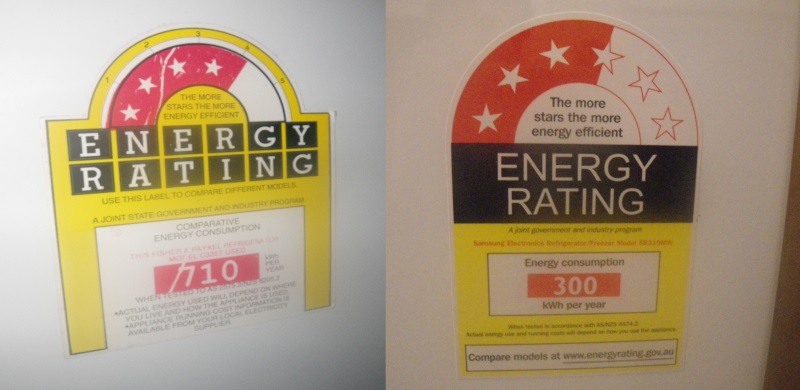 How can our old fridge have 4 stars and use 710kWh but our new fridge has 3.5 stars but only uses 300kWh? The fridge we ended up getting is a Samsung SR319MW Digital Inverter model and it is wonderfully energy efficient. In fact it is one of the most efficient fridges on the market and yet it only has a 3.5-Star rating. It makes you wonder what you would have to do to get six stars. Our energy monitoring system shows us that when this fridge kicks on it only uses about 60 watts and only for brief periods at a time. I did quite a lot of research before I bit the bullet and bought this baby and I learned some interesting things about inverter technology. Fridges like this one have a DC motor (hence they need an inverter to change the power from AC to DC) which allows the motor to be ramped up and down in stages. Unlike a standard AC fridge which is either full on or full off, this fridge can just cruise along and only add a little bit of coolth when it is needed. I noticed when I first turned it on that it was drawing about 140 watts while it was cooling the whole inside of the cabinet, but now it is using much less power and only in short bursts. I also learned that, whereas the temperature inside an AC fridge varies by about a 4˚C, the temperature inside a Digital Inverter fridge should stay within about a 1˚C range. Apparently this is much better for keeping food fresh for a longer period of time and I have certainly noticed that our food stays fresher for longer in this fridge. It also has an LED light which only uses a tiny bit of power when the door is open. (Click on the photo below for more information and specs on the SR319MW).
 Cool Fridge! The Samsung SR319MW Digital Inverter Fridge with LED lighting only uses about 60W for brief periods to keep our food perfectly fresh. There was one potential drawback I had read about in various internet forums. Some people complained that their Digital Inverter fridge made an awful electronic buzzing noise. I asked the salesman at Harvey Norman to plug in the display model so I could listen to it and it seemed fine to me. But that was in a noisy showroom so I was still pretty nervous about the noise issue when I brought the fridge home. Having lived with it for a month now we are perfectly happy with it and haven’t noticed any undue amount of noise. Sure, it’s not silent (and neither of us have the most acute hearing in the world), but it’s no more annoying or obtrusive than any other fridge and we very seldom even notice it.
In general I can highly recommend this fridge. Only time will tell whether it is durable and long-lasting, but for the moment I can say that it is extremely energy efficient, reasonably quiet, well designed, and at about $750, decently priced so we’re very happy with it.
Everyone knows that a leaky or drafty building can be pretty uncomfortable to live in. It can also lose a lot of heat in the winter time and end up being a bit of an energy hog. So a big part of the job of making the Greeny Flat energy efficient was to try to make it reasonably air-tight. But how to know exactly how air-tight it is???
The answer is to do a Blower Door Test. I did a lot of Blower Door Testing in my previous career as a Building Analyst in Montana in the States. But I don’t have the necessary equipment here so I called upon some friends from the University of Wollongong’s Sustainable Buildings Research Centre to come and help. Daniel Jones, who helped us with the construction of the Greeny Flat, brought his associate and Blower Door Testing specialist, Craig McLaughlan, and we spent a wonderfully geeky morning playing around with a bunch of really expensive testing equipment. See video link below.
My goal with the Greeny Flat was to reach an air-tightness level of 3ACH50. This stands for 3 air changes per hour at minus 50 Pascals. ACH50 is the standard measurement used to gauge the relative tightness or leakiness of building structures. A super-tight building like a Passive House can be as low as 0.5ACH50 and a really leaky building would be anything much over about 7ACH50. The leakiest building I ever tested in Montana was 19ACH50 but Craig says he’s tested one here in Australia that was 50ACH50. Anyway, 3ACH50 is a good level of air-tightness that is achievable without going to extraordinary lengths or expense. (It is also the “Just right air tight” level that is recommended by Joe Lstiburek who is the guru of these things at the Building Science Corporation). So we are thrilled with the result of 3.25ACH50.
As we had suspected, the major culprits for air leaks were the sliding windows and doors (the casements and awnings showed very little leakage) but given that the overall air-tightness is exactly in the right range we can happily live with things just the way they are. Yay!
Well we’ve been monitoring the Greeny Flat for almost a month now and the early results are very promising for us to reach the goal of being Energy Positive over a full year. As you’ll see from the following graphs, we’ve already made significantly more power than we’ve used in spite of the fact that for about three weeks we were heating all our water using the electric booster on the solar hot water (SHW) tank. This was due to a couple of key sensors being missing when the SHW system was first installed and taking a long time to get here. The good thing about this is that it has given us some interesting comparisons between our energy use with no hot water at all, with electric hot water, and now (thankfully) with solar hot water.
We have a wonderful little energy monitoring device called a Wattson Meter which monitors and records both the energy that we use and the energy that we produce. We can connect it to a PC and, using the “Holmes” software, see graphs of the various recordings from the Wattson Meter. One of the available graphs shows the total amount of energy we have produced each day (the green columns) and the total amount we have used each day (the red columns) in Kilowatt Hours (kWh). In the graph below we can see the energy that we used for the first six days that the Wattson Meter was installed (on the left hand side) during which time we had no hot water in the house (great energy performance and very quick showers). Our average energy use during this period was 2.71kWh per day.
 Wattson Meter recordings showing daily energy usage (red) and production (green). For the following three weeks, while we waited for the parts for the SHW system, we used more than twice as much power (7.76kWh) as we can see in the graph below. It’s a telling reminder of just how much energy it takes to heat anything with electricity… mind you it takes just as much energy to heat things with gas or solar, it just doesn’t cost as much. Notice how much energy we used on the first day the SHW tank was installed. This was because it had to heat the whole tank full of hot water. On subsequent days it only had to heat as much water as we used and the lowest energy use days were ones that we were away and didn’t use any hot water. The variations in production (green columns) are entirely due to how much cloud there was each day. The highest production days were the sunniest days and the lowest ones were the cloudiest. But the exciting thing for us is that there were very few days when we didn’t make more energy than we used.
 Energy use during the time we had to use the electric booster to heat the hot water tank. For the last two days we’ve finally had the SHW system fully operational and our energy use has dropped back to an average of 4.05kWh per day. This should be somewhere close to our average energy usage for the rest of the year. This compares to an average production from the solar power panels of 9.76kWh. So we’re making a bit more than twice the amount of energy that we’re using. If this continues for the rest of the monitoring period we’ll have no trouble at all meeting the Energy Positive goal and our electricity bills should be pretty low too.
 Energy use now that the SHW system is working But we will still have electricity bills to pay. This is due to a number of factors. For one thing we pay 24.66 cents for each kWh we draw from the grid and only get 8c for each kWh we put into the grid. We also have to pay a service charge of about 70c per day regardless of how much energy we use or make. So we’d have to make about 20kWh per day in order to have no bills at all. As it is, the way we can minimise our bills is to use as much power during the day as possible. That way, the power that we are making goes straight to our use and only the excess production goes to the grid. The following graphs show that we only used 26.5% of the energy that we made from solar (the rest was exported to the grid) but we were able to make 42.3% of the total amount of energy that we used (the rest came from the grid). In order to keep our bills as low as possible we need to find ways to make the blue and green portions of the charts below as big as possible (I’ll write more about how we might do that in another post).
 Proportions of energy used and produced The last graph I want to share today is one that shows when power was used and produced during an average sort of day. Once again the green line shows power production from the solar system which, predictably, peaks right at noon. The red line shows when power was being used and how much (in Watts). Starting on the left we can see that our baseline power usage is about 56W. This is from the monitoring equipment that we have installed and a continuous ventilation fan (necessary to maintain good indoor air quality in this well-sealed house). The three bumps on the left are when the fridge motor kicked in. Thankfully we have a VERY efficient Samsung Digital Inverter fridge so these bumps only add about 60W for a brief period of time. Then we come to the three major peaks for breakfast, lunch and dinner. Once again, the height of these peaks is due to the fact that we are heating with electricity. The good news is that each one is for a relatively short time. We can also see that during the day the baseline power use went up a bit. This is due to the pump on the solar hot water system being activated when the sun is heating the panels. Finally, on the RHS, there is a bit of a mound while we watched a movie before the power drops back down towards the nighttime baseline.
 Graph showing when power was used and produced during a day. The other thing that we’ve been keeping a close eye on is the comfort level inside the flat. I haven’t downloaded any data from the weather station yet but I can tell you that the temperature inside the Greeny Flat hasn’t dropped below 16degC even though the outside temperature has consistently dropped to between 2 and 4degC during the nights. This is a very good indication that it should stay comfortable inside through the winter particularly because we don’t have the insulated blinds installed on the windows yet. Once they are up we will have a lot less heat loss during the night so we should stay nice and cosy. Which all goes to show that Passive Solar Design really does work when it is done right.
In short, we’re thrilled with how things are going and looking forward to the rest of the year.
|
We will not share your information with anyone else and you can unsubscribe at any time.
Recent Newsletters
-
Apr 6, 2024: Open for Sustainable House Day
-
Apr 1, 2022: These floods are no joke
-
Mar 4, 2022: Disasters of Our Own Design
-
Nov 12, 2021: Free Zoom Screening of ‘Now’ Movie on Sunday
-
Nov 5, 2021: The Times They Are A-Changing
-
Oct 14, 2021: Sustainable House Day is Back… virtually
-
Sep 24, 2021: Two Years In the Cottage
-
Jun 25, 2021: Cheap and Simple EV
-
May 14, 2021: 3D Printed Earth Home
-
Feb 26, 2021: Doing Something About It
-
Feb 12, 2021: Barangarooted
-
Jan 29, 2021: Our House on the ABC
-
Jan 8, 2021: Electric Vehicle Madness
-
Dec 12, 2020: Water Works and Solar Cars
-
Nov 13, 2020: Arts Trail Open House
-
Oct 2, 2020: Another Year of Living Positively
-
Sept 18, 2020: Virtual Sustainable House Day on Sunday
-
Sept 11, 2020: Back in Mittagong
-
Aug 28, 2020: One More Week in Port Macquarie
-
August 21, 2020: Progress Report
-
August 14, 2020: This week’s progress report
-
August 7, 2020: Port Project Photos
-
July 17, 2020: Port Macquarie Project Progress
-
June 26, 2020: All Electric Workhorses.
-
June 19, 2020: Port Macquarie Project
-
June 5, 2020: Mount Gibraltar Stone Stairway
-
May 22, 2020: Morrison Wants To Give $11M To A Coal Baron
-
April 22, 2020: Happy Earth Day
-
Mar 13, 2020: Coronavirus makes me feel lucky
-
Feb 20, 2020: Kitchen finished
-
Jan 31, 2020: How To Build a Fire-proof House
-
Jan 24, 2020: Back To Work
-
Jan 3, 2020: Childhood Beach Devastated By Fire
-
Nov 22, 2019: Energy Positive Success
-
Nov 1, 2019: Art Studio Trail This Weekend
-
Oct 18, 2019: Solar Monitoring and Upcoming Events
-
Oct 11, 2019: Queen St Renovations
-
Sept 28, 2019: Greta vs Growth
-
Sept 6, 2019: Sustainable House Day 2019 next weekend.
-
Aug 30, 2019: Solar Installed
-
Aug 23rd, 2019: Solar System Ordered and Other Notable Stuff
-
Aug 16, 2019: Two Projects Finished and Sustainable House Day Coming Up.
-
July 12, 2019: The Beauty of Bamboo
-
July 5, 2019: Back To Russell Island
-
June 28, 2019: Kitchen Upgrade
-
June 21, 2019: What’s Your 2040?
-
May 24, 2019: Public Meeting in Bowral on Friday 31st of May
-
April 26, 2019: Reader Feedback on Granny Flat Economics
-
April 12, 2019: The Economics of Granny Flats
-
Feb 20, 2019: Russell Island Home Tour
-
Feb 8, 2019: Russell Island Nearly Finished
-
Jan 25, 2019: Progress and Other Good Stuff
-
Jan 18, 2019: New Leaf and Progress Photos
-
Jan 4, 2019: Doors and Architraves
-
Dec 28, 2018: Russell Island house progress.
-
Dec 12, 2018: Back on Russell Island
-
Nov 16, 2018: Greeny Flat For Rent
-
Nov 9, 2018: A Tale of Two Houses
-
Oct 2018: Is The Housing Market Starting to See the Light?
-
Sept 16, 2018: Greeny Flat Testimonial.
-
Sept 7, 2018: Lighter Roofs and Cheaper PHEVs
-
August 31, 2018: Windows and Cladding
-
August 17, 2018: Adamant About Eaves
-
August 3rd, 2018: Raising the Roof
-
July 27, 2018: Progress Photos
-
July 13, 2018: Project Progress
-
July 7, 2018: Affordable Housing Project in QLD
-
May 11, 2018: DIY Retrofit Double-Glazing
-
May 4th, 2018: Greeny Flat Available to Rent – Jun/Jul/Aug
-
April 20, 2018: Why you MUST monitor your solar system.
-
April 6, 2018: 4th Earth Day Party – April 22
-
March 30, 2018: It’s a Great Time For Solar
-
March 23, 2018: Beware of Tradies In Your Attic
-
March 16, 2018: More Sustainable Subdivisions
-
March 2, 2018: More Solar For Landlords and Renters
-
Feb 23, 2018: The Reroofing Begins
-
Feb 16, 2018: Record Year for Rooftop Solar
-
Feb 9, 2018: Cooking With Compost
-
Feb 2, 2018: Waste-to-Energy Systems
-
Jan 16, 2018: Should I Replace My Tile Roof
-
Dec 12, 2018: More About Keeping Cool
-
Jan 5, 2018: Keeping Your Cool
-
Dec 29, 2017: Happy New Year
-
Dec 22, 2017: Upside-down Season
-
Dec 8, 2017: Bitcoin Climate Disruption
-
Dec 1, 2017: The Coming Disruption
-
Nov 24, 2017: Suncrowd Review – 0 Stars
-
Nov 17, 2017: Tesla Tiny House Here Next Week
-
Nov 2, 2017: Montana Off-grid Eco Tiny House
-
Oct 27, 2017: Glorious Rain and Good Results
-
Oct 20, 2017: Cattle… Good or Bad?
-
Oct 13, 2017: The Snow Shows Where the Heat Goes
-
Sept 6, 2017: Tesla Tiny House coming to Bowral
-
Sept 29, 2017: Home Solar and Double-dipping on Carbon Emissions
-
Sept 22, 2017: Time to Load Up On Solar
-
Sept 15, 2017: Sustainable House Day This Sunday.
-
Sept 8, 2017: Project Progress, Yellowstone, Etc
-
August 31, 2017: Day Tripping in Montana
-
August 25, 2016: Electric Vehicle Update
-
August 18, 2017: State of The States
-
August 11, 2017: Cool Stuff
-
August 4, 2017: Going to Montana
-
July 28, 2017: Episode 13 – West Side Shade Awning and Deck
-
July 21, 2017: Now That’s True Sustainability!
-
July 14, 2017: How To Choose The Best Electricity Retailer
-
July 7, 2017: A Year of PHEVing It.
-
June 30, 2017: Case Study – Holiday House Energy Upgrade
-
June 23, 2017: In The News This Week
-
June 16, 2017: Grow Your Bricks and Monitor Your Energy
-
June 9, 2016: A New Ethical Energy Retailer
-
June 2, 2017: Dark Days and Bright Spots
-
May 19, 2017: Things That Caught My Eye
-
May 12, 2017: The Sublime and the Ridiculous
-
May 4, 2017: Episode 12 – Replacing the Sewer Lines
-
April 28, 2017: Doing the Dirty Work
-
April 21, 2017: Ban the Bag
-
April 14, 2017: One Down, One Billion to Go.
-
April 7, 2017: 3RD EARTH DAY PARTY – April 22
-
March 30, 2017: Electric Shocks
-
March 17, 2017: Big Changes Coming
-
March3, 2017: Massive Erections
-
Feb 24, 2017: PHEV Love
-
Feb 2, 2017: Every Home Needs This!
-
Feb 3, 2017: Episode 11 – How To Make a Solar Air Heating Wall
-
Jan 20, 2017: Episode 10 – Why Build a Solar Air Heating Wall?
-
Jan 13, 2017: Agents of Change and a New Local Brew
-
Jan 6, 2017: Starfish and the Cost of Australia’s Poor Quality Houses
-
Dec 23, 2016: Episode 9 – What’s a Trombe Wall?
-
Dec 16, 2016: Episode 8 – Retrofitting Passive Solar
-
Dec 11, 2016: Episode 7 – New Windows in Old Walls
-
Nov 25, 2016: Repower Excitement and Episode 6
-
Nov 18, 2016: Community Renewable Energy Investment Opportunity
-
Nov 4, 2016: Window Replacement and Tesla’s New Battery
-
Oct 28, 2016: Suncrowd! What a Buzz!
-
Oct 20, 2016: Episode 4 and Catchpower Answers
-
Oct 14, 2016: Episode 3 – Borers, Rot and Underfloor Ventilation
-
Oct 7, 2016: Episode 2 and SunCrowd Invitation
-
Sept 30, 2016: Home Energy Retrofit Video 1
-
Sept 23, 2016: Catch Power – So What’s The Catch?
-
Sept 16, 2016: What To Do at the End of the 60c Feed-in Tariff
-
Sept 9, 2016: Happy Sustainable House Day!
-
Sept 2, 2016: The Beginning of the End of Solar Subsidies in NSW
-
August 25th, 2016: Lessons from an Infrared Camera
-
Aug 19, 2016: Open Source Tiny Homes
-
August 12, 2016: Sustainable House Day 2016
-
Aug 4, 2016: Solar Bulk-buy with SunCrowd
-
July 29, 2016: ‘Free’ Power with Repower
-
July 21, 2016: Fibro Cottage Energy Retrofit
-
July 15, 2016: Science With a Conscience
-
July 8, 2016: Election Day – Droning On
-
June 25, 2016: ‘Renewable Electricity’ is NOT ‘Renewable Energy’
-
June 19, 2016: The Power of TV and The Rise of The Machines
-
June 12, 2016: Magnetite, Drones and Climate Action
-
June 4, 2016: Stools to Fuels
-
May 29th, 2016: The Future of Energy?
-
May 21, 2016: Concrete Alternatives and PCM’s
-
May 15, 2016: First the Good News
-
May 8, 2016: Underslab Insulation
-
May 1, 2016: Counting Comfort and Costs
-
April 24, 2016: Celebrating Two Years of Energy Positive Living
-
April 17, 2016: Gimme Three Reasons
-
Apr 10, 2016: Second Earth Day Party, 4-7pm April 22nd.
-
April 3, 2016: Home Battery Updates
-
Mar 26, 2016: An Electric Transportation Revolution
-
Mar 18, 2016: Mould and Other Fun Stuff
-
Mar 12, 2016: Reader Feedback and Lithium Issues
-
Mar 6, 2016: Beware of ‘Standard Practices’
-
Feb 28, 2016: Fossil Fools
-
Feb 20, 2016: Grow, Cook, Eat – Offgrid Power – and Welsh Cars
-
Feb 14th, 2016: Gotta Love These Little Houses
-
Feb 7, 2016: Renewable Energy Prepares For Take Off
-
Jan 24, 2016: PHEV Goes Bush
-
Jan 17, 2016: 1.5L/100km
-
Jan 10, 2016: How To Reduce Our Carbon Footprint
-
Jan 3, 2016: PHEV Goes Camping
-
Dec 27, 2015: Electric Driving Less Than Half The Cost of Petrol
-
Dec 20, 2015: Our First Week With an Electric Vehicle
-
Dec 13, 2015: Putting My Money Where My Mouth Is.
-
Dec 13, 2015: Paris Talks Waffle?
-
Nov 29, 2015: Walking for Climate Action and Driving Electric Vehicles
-
Nov 15, 2015: Battery Storage Options
-
Oct 8, 2015: The Big Disconnect?
-
Nov 11, 2015: 7,377,870,064 Elephants in the Room
-
Oct 25, 2015: Pros and Cons of Granny Flats
-
Oct 16, 2015: Greeny Flat Wins Green Globe Award!
-
Oct 11, 2015: What’s Wrong With This Picture?
-
Sep 27, 2015: Build Tight, Vent Right
-
Sep 20, 2015: Driving Sustainability
-
Sept 12, 2015: Greeny Flat Named 2015 Green Globe Awards Finalist
-
Sept 6, 2015: Sustainable House Day
-
August 27, 2015: Water, Water Everywhere!
-
August 23, 2015: Back in Brazil
-
August 14, 2015: Ranch Life and Sustainable House Day
-
August 7, 2015: Greetings From Montana
-
August 8, 2015: Renewable Choice for Oz Voters
-
July18, 2015: Whoops, I Spoke Too Soon
-
Jul 12, 2015: Nice Weather for Eskimos
-
Jul 5, 2015: Solar Planes, Trains and Automobiles
-
Jun 28, 2015: Greeny Flat Welcomes Sustainable Lifestyle
-
Jun 21, 2015: Happy Winter Solstice!
-
Jun 14, 2015: Test Drive the Greeny Flat
-
Jun 7, 2015: Visit to a Local Food Forest
-
May 31, 2015: Exciting Times!
-
May 24, 2015: The Heat Goes On
-
May 17, 2015: DIY Solar Air Heater Prototype
-
May 10, 2015: K.I.S.S. My House
-
May 3rd, 2015: Tesla Reinvents Electicity
-
Apr 26, 2015: Party Pics and Random Bits.
-
Apr 22, 2015: Experiment Declared Resounding Success!
-
Apr 19, 2015: Greeny Flat’s 1st Earth Day Party this week
-
Apr 12, 2015: Sand Wars, Floating Solar Farms and other Fun Stuff.
-
Apr 5, 2015: Invitation to a Party
-
Apr 4, 2015: UK’s First Carbon Neutral Town
-
Mar 21, 2015: Latest Results and Reader Feedback
-
Mar 16, 2015: Our Double-glazed Windows
-
Mar 8, 2015: Form Follows Function
-
Mar 8, 2015: Reader Feedback
-
Mar 1, 2015: Some Fun Stuff
-
Feb 22, 2015: Proof Positive
-
Feb 15, 2015: Case Studies – Heat Doesn’t Rise
-
Feb 8, 2015: In all sorts of hot water
-
Feb 2, 2015: Rethinking the way we design and build
-
Jan 25, 2015: Latest Results and Electric Vehicles.
-
Jan 20, 2015: The GreenPower plot thickens
-
Jan 18, 2015: Switching to Green Power
-
Jan 11, 2015: Our surface-mounted electrical system
-
Jan 4, 2015: Our Solar Power System
-
Dec 28, 2014: Sandwiches for Cathedrals
-
Dec 24, 2014: December Results
-
Dec 16, 2014: Eco-home Display Village Concept
-
Dec 14, 2014: All New Homes to be Energy Positive by 2016.
-
Dec 7, 2014: $41 Energy Bill for last three months
-
Nov 25, 2014: Think light for a cooler roof
-
Nov 22, 2014: Staying cool in the heat
-
Nov 9, 2014: The benefits of a small home.
-
Oct 26, 2014: Last Sunday the Greeny Flat made 4 TIMES as much energy as it used!
-
Oct 12, 2014: Lessons learned so far
-
Oct 10, 2014: Why an all electric house?
-
Sept 22, 2014: Great Day for Renewable Energy
-
Sept 21, 2014: Greeny Flat Cost Analysis
-
Sept 11, 2014: $10.63 worth of energy in 3 months.
-
August 30, 2014: Greeny Flat open for Sustainable House Day
-
August 22, 2014: Four months and going strong.
-
July 22, 2014: Three month’s results… All Positive!
-
July 4, 2014: Energy Independence Day!
-
June 11, 2014: Cintia’s winter
-
May 27, 2014: Greeny Flat on ABC
-
May 27, 2014: Cool Fridge Wins Energy Star Wars
-
May 23, 2014: Testing the air-tightness
-
May 19, 2014: First month’s results… VERY promising!
-
Apr 22, 2014: Earth Day marks the start of one year of monitoring
-
Mar 24, 2014: start of a big week
-
Mar 7, 2014: BASIX is a JOKE!
-
Mar 6, 2014: starting on the kitchen
-
Mar 1, 2014: Pumps and Solar Hot Water: decisions, Decision, DECISIONS!
-
Feb 24, 2014: Greeny Flat in the news
-
Feb 20, 2014: surface mounted electrical system
-
Feb 19, 2014: end in sight for the construction phase.
|

