Here in Australia we are just one week away from a federal election and, as usual, the choices are dismal and misinformation abounds. For example, I’m starting to notice that politicians and the media happily use the term ‘Renewable Energy’ when they really mean ‘Renewable Electricity’. For example, the ACT government recently announced that, due to the success of their Renewable Energy policy, they have brought forward the deadline for achieving 100% Renewable Electricity from 2030 to 2020. This is an exceptional achievement for which the ACT is receiving international recognition as a world leader in Climate Action. However when I read about it in the media or hear politicians and bureaucrats bragging about it they often accidentally say ‘100% Renewable Energy’ instead of ‘100% Renewable Electricity’.
Even this recent article from ‘The Conversation’ (who seriously should know better) makes this mistake. It states that, ‘More recently, Queensland committed to generating 50% of its energy from renewable sources by 2030′. So much for ‘academic rigour’. This is not only untrue, it is VASTLY inaccurate. If you read the announcement you find that, in fact, Queensland has committed to generating 50% of its ELECTRICITY needs by 2030. Assuming that Queensland has a similar energy mix to the national statistics quoted below, 50% of its electricity would be equal to 7.5% of it energy, not ‘50% of its energy’. This is a BIG error and we need to start watching for it and calling them out on it because most people don’t realise that they’re being lied to. To that end I have written to ‘The Conversation’ pointing out their error and requesting that they write a follow-up piece explaining the difference between ‘Renewable Energy’ and ‘Renewable Electricity’ and why this is such an important distinction to make.
It’s obvious when you think about it. Electricity is only a portion of the energy we use. People, homes, businesses, industry, agriculture, and transportation systems all use energy in various forms including electricity, petrol, diesel, oil, kerosene, aviation fuel, natural gas, uranium, coal, coke, wood and LPG (i.e. ‘Propane’ for our American readers). According to this report from the Australian Bureau of Statistics, the total amount of energy consumed in Australia in 2013-14 was 5831 petajoules and the total amount of electricity generated during the same time period was 894 petajoules or 15% of the total. So when we do achieve the worthy goal of 100% Renewable Electricity we will still only be at about 15% Renewable Energy. As you can see, this is a MASSIVE difference. In order to get to 100% Renewable Energy we will have to replace ALL of the fossil fuels (all the coal, oil and gas derivatives) with renewable forms of energy.
Where it gets tricky is that, in order to reach the real goal of 100% Renewable ENERGY, we are going to have to electrify much, if not most, of the economy. With the best in currently available technology we can make and store renewable energy in a number of forms including ELECTRICITY (which can be stored in batteries), HEAT (which can be stored in molten salt, graphite, water, etc), GASES such as hydrogen or methane (which can be stored in tanks or as metal hydrides or other chemical combinations), MECHANICAL ENERGY (which can be stored in flywheels or using gravity e.g. lifting a weight or as compressed air), and LIQUIDS such as biodiesel or ethanol (which can be stored in tanks). Of these, the form of renewable energy that is currently most readily available and cost-effective for the majority of people is electricity.
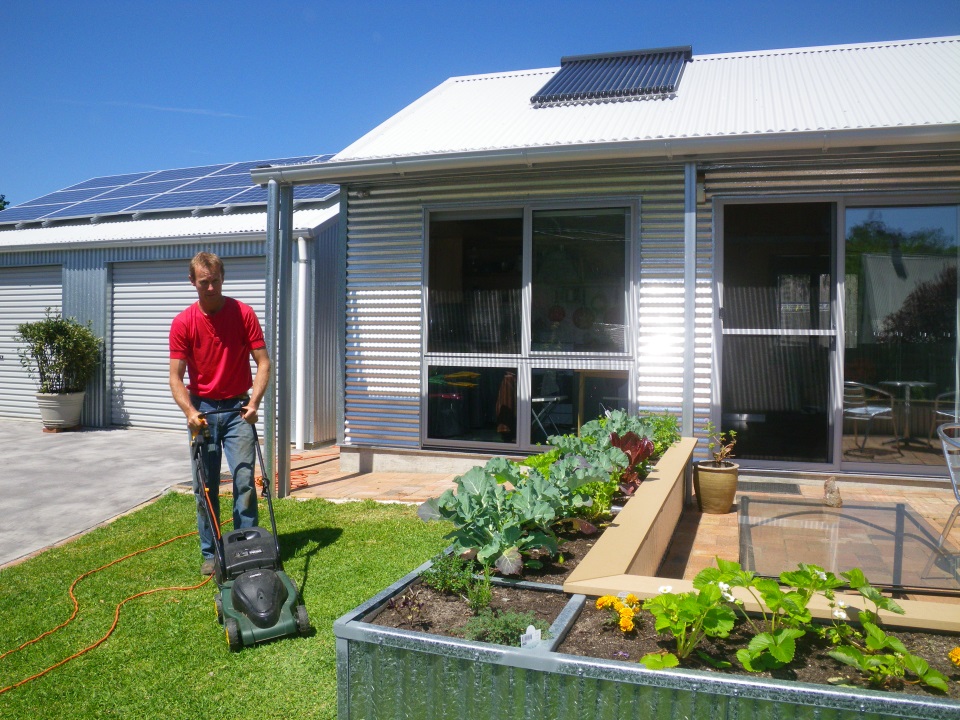
We are already starting to see more and more of our energy uses switching to electric. The obvious one is cars where electric vehicles are making huge waves around the world even though we’re hardly seeing a ripple here in Oz. But we’re also finding that lots of other things like home heating and hot water systems are more efficient and cost-effective in the form of electric heat pumps than the old gas units. We’ve had electric trains for a long time but soon we’ll be seeing more and more electric buses and trucks and motorbikes and bicycles. Even things like lawnmowers are rapidly getting electrified. The good thing about this is that we can potentially and quite easily make the energy to run all these things from renewable sources. The scary thing is that, if we were to electrify the whole of the Australian economy, it would require something like a 600% increase in the amount of electricity that we currently consume. In that scenario I can see the goal of reaching 100% Renewable Electricity rapidly receding into the distant future.
The answer, of course is that we need to find every possible way to conserve energy as we progress through this transition to renewable energy. As I quoted my friend Manny last week, ‘We have to REduce before we PROduce’ and meanwhile we have to not let politicians and the media get away with confusing Renewable Electricity with Renewable Energy.
Rasa Rocks the Cradle-to-Cradle Concept
The Riversimple-Rasa starts on road testing in the UK. (Source: Gizmag)
Speaking of electric vehicles and hydrogen energy storage, I wrote about this fabulous little Welsh car called the ‘Rasa’ by Riversimple in our Newsletter back in February. Not only is the technology revolutionary (with things like hydrogen fuel-cell power, in wheel electric motors, carbon-fibre shell, supercapacitor energy storage, and fuel economy of 0.9L/100km) but the way it is being offered to customers is very different too. As you can read about in this Gizmag article…
The Rasa will not be available to buy when it is launched in 2018, but instead customers will be able to enjoy the car by paying a monthly fee that covers fuel, maintenance, repairs and insurance. This type of plan, says Riversimple, will eliminate built-in vehicle obsolescence and make sustainability a competitive advantage, rather than a cost.
Riversimple have produced this YouTube video to help explain the brilliance of their business model. I particularly appreciated the following statement from Hugo Spowers, Founder and Technical Director of the company…
‘we pay for all the running costs so our interests are longevity and low-running costs rather than obsolescence and high running-costs.’
This is fantastic! I have often lamented the fact that manufacturers no longer make things that last. In fact it is typically considered sound business practice to deliberately make things that don’t last or are outdated very quickly. This is the idea of built-in obsolescence which theoretically leads to economic ‘growth’ by forcing people to buy more and more crap that they don’t need and won’t last. What it really leads to is waste and environmental destruction. So it is SUCH a blessed relief to hear a company founder extolling the virtues of ‘longevity and low-running costs’.
This is exactly the sort of thinking that went into the Greeny Flat. Longevity, low-maintenance and low running-costs were high priorities in our design and material selection processes and the results are proving to be very successful. The entire running-cost for our first year living in the Greeny Flat was $312 and, apart from normal house cleaning, it requires almost no maintenance. On top of that, the whole structure is designed so that it can be dismantled and the materials reused at the end of its useful life. Apart from the concrete slab and the tiles in the bathroom the entire Greeny Flat can be taken apart with a screwdriver which allows the materials to be harvested and put to use in the next project. Much of this thinking was first expressed by William McDonough in his wonderful book, ‘Cradle-to’Cradle‘ in which he puts forward the idea of developing ‘closed-loop’ industrial cycles.
”…waste equals food’ is the first principle the book sets forth. Products might be designed so that, after their useful life, they provide nourishment for something new, either as “biological nutrients” that safely re-enter the environment or as “technical nutrients” that circulate within closed-loop industrial cycles, without being “downcycled” into low-grade uses (as most “recyclables” now are)’
The Rasa car is sophisticated example of this philosophy put into practice and it will be worth watching how it develops because it has the potential to revolutionise manufacturing around the world. And, if you’re interested in Willaim McDonough and his Cradle-to-Cradle philosophy, it’s also worth watching this TED talk from 2005. It’s not the easiest talk to watch or listen to but it will give you an idea of what an interesting thinker he is.
As I mentioned in our Newsletter a couple of weeks ago, we were recently honoured by a visit from Justin Huntsdale from ABC Illawarra. Justin recorded a video interview which aired on ABC News24 yesterday. As far as I know this is the first time the Greeny Flat has been on television and the effect on our website was dramatic. By 9am we had so much traffic that our server was overloaded and by the end of the day we had had more visitors than we usually get in a month. Which goes to show how powerful Television can be for spreading ideas. My dream is to see less doom and gloom and more hope and inspiration being spread this way.
The ABC piece also brought a LOT of new subscribers to this Newsletter so I would like to take this opportunity to welcome you and to thank all our subscribers, new and old, for your interest, support and for helping to spread the word about living more sustainably. Please feel free to contact me via our Contact Form if you have questions, comments or suggestions for things you would like us to write about. For those who missed it, the video is available to view on the ABC website at the following link. Thank you Justin for creating a great little piece that succinctly gets the point across and helps to spread the word about Climate Action at home.
Please click on the image above to visit the ABC website then click on the first photo to view the video.
The Rise of the Machines
Spatial Technologies’ mapping drone takes to the sky.
As I started to write last week before my laptop battery went flat, I recently had the great privilege of spending a few days with Anton van Wyk from Spatial Technologies, a Melbourne-based company specialising in Geographical Information, Surveying and UAV (Drone) Mapping. Our goal was to complete aerial surveys of four potential sites for solar farms. Unfortunately the weather was uncooperative and we only got three sites done but it was a real eye-opening experience for me.
About six months ago I joined a group of local residents concerned about Climate Change and formed a company aimed at reducing our community’s greenhouse gas emissions. We named the company Renewable Energy Wingecarribee Pty Ltd and our initial focus is on building large-scale renewable energy projects in the Wingecarribee Shire Council area. So far we have identified four promising sites with potential for solar farms, i.e. good solar access, low potential for other uses and proximity to power lines. We are now undertaking a Feasibility Study on these four sites to determine whether they hold commercial potential. As part of that process we need to have the sites surveyed and detailed contour plans drawn up. We could have commissioned a surveyor to do this on the ground but we discovered that it is MUCH cheaper and quicker to do it by drone mapping. So we have hired Spatial Technologies to do the job.
The process is pretty straightforward, Anton lays out a series of flight paths for each site, gets the drone in the air, uploads the flight path to the drone then the drone automatically flies to the right height, precisely following the flight path and taking high-resolution aerial photographs every few meters across the entire site.
The video screen on the drone controller showing the pre-programmed, zig-zagging flight path with dots at each photo location.
Everything is controlled by GPS and each flight path is limited in length by a battery life of about 15 minutes. When it completes a flight the drone returns to where it started so that Anton can land it, replace the battery and prepare it for the next mission.
As mentioned earlier, the weather was not very cooperative on the days Anton was here. In fact he said it was the windiest conditions he had attempted to fly in. The drone is only capable of 36km/h so winds gusting above 30km/h can create serious problems. At worst the drone could simply be blown away and, if it blew out of range of the controller, there’s no telling where it might end up. We were right on the edge of those conditions and we could see from the ground that the drone was struggling to follow its predetermined path. It was getting buffeted around by the wind gusts pretty heavily and Anton was concerned that this would lead to blurry photographs which would give an inaccurate contour plan. But everything turned out really well and we got wonderfully clear and detailed photos of every inch of the sites we flew. Anton has now run those through his computer software and produced exceptionally detailed site plans which we can use for planning and developing our solar farms.
Screenshot of one of the completed contour plans and an aerial photo of one of the sites.
It was truly remarkable watching this little drone do its work. Anton is a pilot so he enjoys manually taking off and landing the drone but, in reality, he doesn’t need to. All he really needs to do is change the battery and upload the flight paths. Computers do the rest.
As a result we are getting highly detailed site plans plus aerial photography of four large sites for less than $4,000 with only two days of site work. We didn’t try to get comparable quotes from traditional surveyors but my guess would be that we could have easily paid $4,000 for each site, got less detailed contour plans and without the added bonus of aerial photographs. So this drone mapping service is great for our company’s efforts to build our renewable energy projects.
It also left me with some strong and lingering misgivings about where the human race is headed. A drone is basically a flying robot and we are currently at the beginning of a robot revolution. Businesses and industries all around the world are rapidly developing technologies that allow machines to replace people. From huge factories building Tesla cars and batteries ‘manned’ almost exclusively by robots, to self-driving cars, home automation systems, robotic vacuum cleaners, self-service check-out lines in supermarkets and even the new automatic tellers in banks that can do almost all the things a person used to do. Humans are being replaced by computers and robots all over the place.
On one level, and in the short term, all of these things make people’s lives a little bit easier. One man, Anton, was able to complete in two days and with very little physical effort, what it would have taken a team of three people a couple of weeks of hard work to do only a few short years ago. In some ways this is great but where does is all of this take us in the long term?
What is society going to look like if machines take over most of the jobs?
Even more concerning to me is the fact that all of the work the drone did required a certain amount of planning on Anton’s part and then very little input from him. How long will it be before Anton doesn’t even need to be there? Currently Anton is telling the machines what to do and they are doing it extremely efficiently. But it’s not a very long step from here to where the machines are telling us what to do. Once we start adding artificial intelligence into the mix things could get seriously creepy.
Currently we are in control. We are directing the machines to do things for us AND we have control over their power supply. As a last resort we can pull the plug. But it’s not hard to see a situation where we hand control of energy supplies and manufacturing to computers… then what happens? Soon we may not have the ability to turn them off… they might have the ability to turn us off! I’m not kidding… think about when we first heard about drones, it wasn’t because they were doing helpful things for people like mapping sites for solar farms, no… it was during the Iraq War. The first use that drones were put to was for killing people.
If I let my imagination go down this path, I pretty quickly find myself in ‘Terminator’ country where the last surviving humans are in a desperate struggle against the machines. Or I’m in ‘Wall-E’ where machines do absolutely everything for the humans who can’t even stand up and walk by themselves anymore. Or, worse still, in ‘The Matrix’ where machine wars have poisoned the atmosphere and blocked out the sun so people have become the power supply for the machines, bred and harvested for their electrical energy and kept subdued by a virtual reality.
Coming soon to the air near you….
Okay, enough of that. I try hard to focus primarily on what I can do here and now to help make the world a better place. That is what the Greeny Flat is all about and that is what Renewable Energy Wingecarribee is about too. We believe that building solar farms will help reduce our communities greenhouse gas emissions which, in turn, will help to protect the planet and its people from the damaging effects of climate change. This little flying robot is helping with that and, for now at least, that’s a good thing. Another very good thing would be if Hollywood produced movies that gave people ideas for a future we might actually WANT to help create. I’m a great believe in the idea that we get what we focus on. If we focus on all the things wrong in the world and on all the things that we fear most then we play a part in making those things happen. I think it’s important to recognise what we don’t want then move on to focus on what we DO want. If we can imagine it we can make it…. actually I think it’s deeper than that… I think that if we imagine it we WILL make it so it’s vital that we spend more time and energy imagining a peaceful, healthy, productive, wonderful future full of music and laughter, good food, clean air and water, thriving ecosystems and content people than we spend focusing on the things we’re afraid of. Unfortunately the media and movie industries seem to take the opposite approach which is one reason why I don’t watch television (except, of course, when there’s a story about the Greeny Flat).
Reader Feedback about Magnetite
In last week’s Newsletter I wrote about how Magnetite retrofit double-glazing is helping my sister make her Canberra townhouse more energy efficient. I received the following comments about Magnetite from Marcus, a reader in the Southern Highlands…
‘I did have a look at Magnetite when I was planning our window upgrade. Whilst it is certainly cheaper than full double glazing, I realised that to be effective, I would have to refurbish the existing sash units to reduce gaps, etc. I could have spent many happy hours doing this (or paying a fortune to have it done). Going for full double glazing was obviously a much better option (and probably cheaper, if you consider the work involved in refurbishing the sash units). I think you might have made this point in this Greeny Flat newsletter, as the Magnetite units are unlikely to do a good job if the original units are leaking like sieves.’
Marcus is absolutely right that completely replacing old windows with new double-glazed units (especially casement or awning windows that provide MUCH better air sealing than double-hung or sliding windows) will certainly result in better energy performance but I’m not sure that it will be more cost-effective in all cases. In my sister’s case, she did get quotes for completely replacing those three small windows and the cost would have been three times as much as the Magnetite. As for the air sealing, she feels like the Magnetite does an excellent job for a reasonable cost. It probably depends a fair bit on the way the building is constructed. Perhaps my sister’s old windows were installed in such a way that they were much more difficult and expensive to replace than Marcus’s. I’m not sure of all the details but, if you’re considering retrofitting old windows, I think it’s worth looking at both options and weighing up the pros and cons in your particular case. Both Marcus and Cate are happy with the results they have achieved even though they went in different directions.
22 Ways to Reduce Energy Use Before Installing Solar Panels
Speaking of conserving energy… as my good friend Manny likes to says, ‘You’ve got to REduce before you PROduce’.
Meaning that, before you install solar panels on your house (or any building for that matter) it is very important to find ways to conserve energy wherever possible first so that you can keep the size, cost and embodied energy of the solar system down to a minimum. This week I came across a good article from The Conversation that lists 22 ways to do just that.
Magnet Fridges
Magnet fridge (Source: Gizmag)
One of the suggestions in the article above is to get rid of old and inefficient fridges. Soon we may have a completely new option to replace old fridges with ones that use magnets instead of compressed gases to cool the air inside. According to this Gizmag article, magnetic fridge technology has been around for a while but it is only just becoming a cost effective option for reducing the energy consumption and greenhouses gases associated with refrigeration.
That’s all for this week. Thanks for reading. Next week we’ll discuss the Cradle-to-Cradle philosophy and how it applies to Welsh cars.
Andy here, reporting this week from sunny Canberra where the ice was thick on my sister’s birdbath this morning. Cate (my sister) has a little brick-veneer-and-tile townhouse near Belconnen which she is gradually retrofitting to make it as energy efficient as possible. So far she has insulated the walls and ceiling, installed a solar power system on the roof, replaced the sliding door out to the patio with a double-glazed one, added insulating cellular blinds to most of the other windows, and installed ‘Magnetite‘ glazing on some of the west-facing windows and the two skylights.
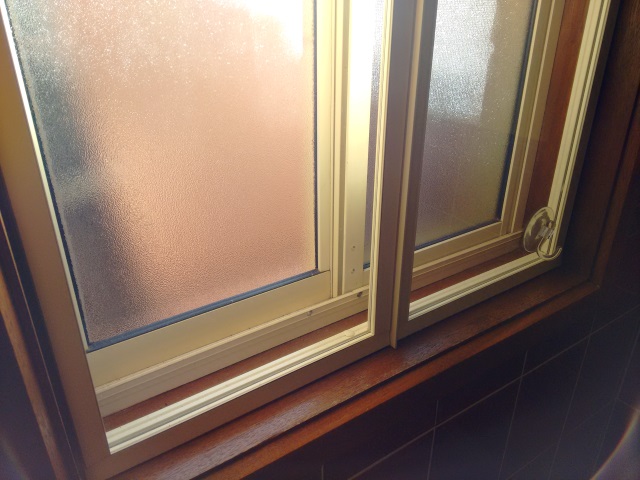
Magnetite ‘double-glazing’ retrofitted to the inside of Cate’s bathroom window.
Magnetite is a system that allows you to retrofit a sort of double glazing to existing windows. Basically it adds a perspex cover to the window which is sealed tight and held in place by magnetic strips installed around the edge of the window. The company’s website claims that ‘Magnetite® has been independently tested by WERS (Window Energy Rating Scheme) to demonstrate an improvement in the window thermal performance by over 70%’. I make it a point to never believe a word any company says about their own product, especially when it comes to insulation values. I have found, over the years, that there is more in the way of false advertising and exaggerated performance claims in the energy efficiency field than just about anywhere else. However, in this case, I think a 70% improvement is quite plausible. In Cate’s case the existing windows are single-glazed aluminium sliders which have pretty poor insulation and air-sealing properties. I’m sure the Magnetite provides a much better air seal and the air space between the panes must be helping with the insulation.
The Magnetite system is not cheap. Cate paid $1300 for three small windows and two skylights so she will probably never save enough in energy bills to recoup the cost of the installation. However there are considerations other than payback time that make the investment worthwhile. The big one is thermal comfort which the Magnetite improves considerably. Another one in Cate’s case is sound insulation. She lives on a busy street with neighbours close by and the Magnetite definitely helps to block some of the noise.
Magnetite for Skylights
One of Cate’s two skylights with a Magnetite cover over it (well… under it to be precise).
Where the Magnetite system seems to offer a very good solution is for skylights. Many houses in Australia, like Cate’s, have simple skylights consisting of a bit of clear roofing over a reflective-lined box in the attic with a crinkly perspex sheet sitting in a wooden frame at ceiling height. These can be reasonably effective at allowing natural light into dark spaces but they are awful in terms of energy efficiency and air sealing. I have yet to see one of these ‘skylights’ that had a decent air seal around it. In most cases they simply create a big hole in the ceiling insulation and leak a LOT of air.
As you can see from the photo above, the Magnetite places a clear sheet of perspex under the skylight so it still lets in the natural light. At the same time the magnetic strip that surrounds the Magnetite frame creates an effective and durable air seal will greatly reduce the amount of air leakage through this type of skylight.
The Magnetite panels can be easily removed for cleaning or for summer airflow by sticking the provided suction cup on the perspex and pulling inward.
Verdict?
Cate has had the Magnetite for about two years now and reckons it was a good investment, especially for the skylights. The other windows in her house a much bigger (which would make installing Magnetite on them expensive and complicated) plus they already have insulating cellular blinds on them so she probably won’t be buying more Magnetite panels but she’s happy with the ones she has.
On a side note, she says that the best thing she has done for the house in summer was to replace the flyscreen doors at the front and back of the house with security screens. These are lockable and have a heavy-duty mesh that would be very difficult to cut or break through. This allows her, in her medium-density urban neighbourhood, to leave the front and back doors open at night in summer and sleep well at night without fear of someone breaking into the house. This means she can get good air-flow through the house at night and cool the Thermal Mass of the floor slab which helps to keep the house cool throughout the hot Canberra summer days.
Drone Mapping for Solar Farms
Anton brings the drone in for another perfect landing.
Ah, bother… I just realised that I forgot to bring the battery charger for my laptop and the battery is about to die. So I will have to complete this story next week. Suffice to say, I had a very eye-opening few days last week working with Anton van Wyk from Spatial Technologies using a drone to perform aerial surveys of four potential sites for solar farms as part of my work with Renewable Energy Wingecarribee Pty Ltd.
It’s amazing what these UAV’s (Unmanned Aerial Vehicles) are capable of. They’re basically little flying robots that are can perform a wide range of functions that would have previously been difficult and expensive if not impossible. There is no doubt that they, and other robot technologies, are going to dramatically change the way we live and work. I worry about where all this will take us in the long run. For now it’s amazing to see what the technology is capable of but it might not be so mesmerising when robots take over most of our jobs.
I’ve heard it said that in ancient China, where most people lived and worked on their own subsistence farm, it was considered highly impolite if you went to visit a friend, ate a meal and left without make a solid ‘deposit’ in the composting toilet. I don’t know if this is true but it makes sense to me. In a truly self-sufficient (closed-loop) system all of the nutrients that are removed from the soil in the form of food must be returned to the soil in the form of fertiliser or, over time, the soil will become depleted of nutrients and less and less productive. In such a system, human waste would be highly valued for its nutritional content… but what about its potential energy?
Donate Your Solids to Science
The ‘Donation Box’ at the Walden Pavillion (Source: Gizmag)
This Gizmag article describes a project currently underway at a university in South Korea where members of the public can make a donation to the cause of science by using the toilet.
‘The UNIST toilet uses an anaerobic system, similar to the Loowatt. A grinder inside the toilet dehydrates and breaks the waste down into a dry, odorless powder, which is then transferred to a digestion tank that is home to thousands of different microbes. As they go to work, the compost biodegrades, generating carbon dioxide and methane, which the scientists harvest. The carbon dioxide is used to culture green algae, a common source of biofuel, while the methane can be stored for use as a heating fuel.’
The article is pretty funny. We’re all a bit uncomfortable talking about the subject but, in reality, human waste is serious matter and a highly valuable resource both for the nutrients it contains and for its potential as an energy source. If you’ve seen Matt Damon in ‘The Martian’ you will recall that he survived by using human waste to create soil to grow enough potatoes to get him through until rescue arrived. This was an extreme illustration of a ‘closed-loop’ system similar to the subsistence farms of ancient China. However I think it’s worth remembering that, ultimately, the Earth is also a closed-loop system and we must learn to appreciate our ‘waste’ products for the valuable resources they contain.
East Coast Low Brings Welcome Rain
Welcome rain fills our tank after months of dry weather.
There are few things that make me feel more grateful in life than being warm and dry inside our cosy little Greeny Flat when it’s wet and wild outside. It’s been many months since our rainwater tank was full or the creeks and dams around here had a good flush-out so this current East Coast Low system is bringing some wonderful rain. We’ve had over 80mm in the last twenty four hours which is very welcome. I just hope the wind and rain hasn’t caused any problems for any of you reading this.
The Connected Smart Grid of the Future
This article from the Sydney Morning Herald emphasises the point I was making in last week’s Newsletter about the future of energy being On-the-Grid not Off-the-Grid. Rather it will see us all, our homes, cars, businesses, appliances, solar systems and batteries, connected to a Smart Grid that allows us all to become energy traders. This will benefit us all in terms of cheaper, cleaner energy, fewer carbon emissions and more control over our energy imports and exports. It won’t be good for the fossil fuel industry but that’s a good thing too.
New EV (Eccentric Vehicle) from Morgan
The new EV3, three-wheeled electric vehicle from Morgan (Source: wired.com)
I’ve written quite a lot about Electric Vehicles but nothing quite like this one! See this article from wired.com for more about this head-turner.
Australian Homes Still the Largest In the World
No kidding.
I’ve mentioned it many times but I still can’t get my head around WHY Australians need to be building the largest new homes in the world. As far as I’m concerned it’s a national disgrace. This article from ‘The Everyday Experts‘ (A.K.A. Australian Gas Networks) seems to consider it a badge of honour. No doubt, for those trying to flog fossil fuels for heating homes, an average new build size of 243 square meters is an encouraging statistic. As these ‘Experts’ put it…‘Bigger homes need bigger energy solutions’
I cringe in shame.
What was interesting to me about the article was the comparison with other countries and with Australia’s past. In 1984 in Australia the average new build was only 162 sqm. In Denmark they currently build the largest new homes in Europe at 137 sqm while in the UK the average is only 76 sqm…. 76 SQUARE METERS! That is less than a THIRD the size of Australia’s new homes and about half again as big as the Greeny Flat (which is only 57 sqm). With an extra 20 sqm we could easily fit a couple more bedrooms and another bathroom onto the Greeny flat and have plenty of space for a family of five.
Which all brings me back to the question… ‘Why do Australians think we need the biggest homes in the world?’ Any time anyone suggests to me that building an energy efficient home is too expensive I simply make the point that all we need to do is build smaller homes. Then we can easily afford to put a bit more into things like double-glazed windows, better insulation and air sealing, solar panels and water conservation measures.
The Simpler Way
My good friend Glenn Robinson sent me a link a few days ago to an excellent report entitled ‘The Simpler Way‘. You may need to subscribe to their website (simplerway.org) to download the pdf version but all of the information is freely available on the website. Here is a quote from the introduction to the report which serves as an encouraging counterpoint to the story above about Australia’s enormous homes.
‘… A free and meaningful life, it turns out, does not actually depend on having all the latest consumer products or having the nicest house on the street. On the contrary, working long hours just to ‘keep up with the Joneses’ leaves people with less time for the things that really matter in life, like friends, family, community, and engaging in peaceful, creative activity. This is the stuff that makes life worth living, and the interesting thing is we don’t need to be rich to enjoy it all. The best things in life really are free. Abundance is a state of mind.’
I haven’t read the whole report yet but I look forward to it based on that introduction. I know I’m going to enjoy it and I’ll probably be quoting more from it in coming Newsletters.
Greeny Flat in the Media
Yesterday saw the Greeny Flat get a write up in the ‘Home’ section of the Saturday Daily Telegraph. It’s a good article by Jennifer Veerhuis about how to keep a house warm in winter without using a heater. It’s mostly about Passive Solar Design which, as you know, is the key to keeping a building both warm in winter and cool in summer naturally.
Justin Huntsdale shooting our kale palms for ABC News24
We’ve had a few mentions on our local 2ST radio station lately and on Friday we had another visit from Justin Huntsdale from ABC Illawarra. Justin has done a couple of excellent radio pieces about the Greeny Flat over the last two years but this time he came to shoot a video interview which he expects will air on ABC News24 in the near future. I’ll keep you posted but don’t worry, if you miss it on ABC it will be available online and Justin will provide me with a link to the video.
Thanks again to Jennifer, Mitch and Graeme from 2ST and Justin for helping us spread the word about cost-effective, energy positive and sustainable homes. Our goal is to help transition the Australian building industry away from the huge, energy-sucking monsters we are currently producing and towards smaller, simpler, more practical, lower maintenance, water conserving and energy positive homes and commercial buildings. Any publicity we get helps to raise awareness and hasten the transition.
There is no question that we, as a global society and Australia as a nation, need to act quickly and decisively in the transition to a low-carbon economy. Climate Change is upon us. The evidence is overwhelming. Atmospheric CO2 and methane levels are the highest they’ve been for a million years. Global temperatures are spiralling out of control. Extreme weather events are multiplying. Coral reefs are dying. Sea levels are rising and islands are disappearing. We’ve known this was coming for thirty years. We’ve known that we are causing it. We’ve known that we need to act to reduce greenhouse gas emissions in order to avoid potentially disastrous results and yet we continue to do nothing. In fact, we are making matters worse when there is so much we could be doing to make things better.
‘Politicians Discussing Global Warming’ by Isaac Cordal – I have used this image a number of times before and it continues to perfectly summarise our current situation.
Our Prime Minister once said, ‘Climate change is a global problem. The planet is warming because of the growing level of greenhouse gas emissions from human activity. If this trend continues, truly catastrophic consequences are likely to ensue from rising sea levels, to reduced water availability, to more heat waves and fires.’
In spite of this, and in spite of Australia’s commitments made at the Paris Climate Talks, the ‘right honourable’ (perhaps we should make that wrong and dishonourable) Malcolm Turncoat has just passed a budget that makes no mention of climate change and only mentions Renewable Energy in the act of stripping $1.3 Billion from ARENA (the Australian Renewable Energy Agency). In last week’s Newsletter, I quoted Dr John Hewson (former leader of the Liberal Party) as saying, ‘The slogan is jobs and growth. I would have thought that one of the most significant sectors for economic and jobs growth is renewables – I am staggered that it didn’t get a mention in the speech or in the documents.” Hewson said the decision to remove funding from ARENA was an ‘absolute tragedy.’
After reading Dr Hewson’s comments I was honoured by the opportunity to meet Dr Hewson last week. We had a very interesting discussion which revolved around the issues of Climate Change and Renewable Energy. Dr Hewson is a staunch advocate for transitioning to a low-carbon economy and is deeply involved with a company that is developing some VERY promising solar thermal and energy storage technologies. I hope to obtain Dr Hewson’s permission to share more information with you about the fledgling company and their developments very soon. For now, let’s just say that these kinds of technologies have the potential to greatly reduce the current cost of producing and storing renewable energy and thereby speeding up the shift to a low-carbon economy.
Can Renewable Energy Replace Fossil Fuels?
Ultimately we MUST figure out how to source all of our energy from low-carbon alternatives. Nuclear fission or fusion may play a role in that future but, until we have solved the problem of what to do with the waste without poisoning ourselves and the planet over the long term, I am of the opinion that nuclear energy is not an option. So that leaves Renewable Energy (RE).
BUT I do not believe that we can replace all of our current fossil fuel use with RE. We simply use too much energy. We have been spoiled by cheap and plentiful supplies of coal, oil and gas for far too long. We (meaning humans as a species) are insanely wasteful, and I do mean INSANE because we know we are destroying our own future and yet we keep doing it. In order for RE to replace fossil fuels we have to dramatically reduce our energy consumption. This will involve a complete overhaul of ‘Business as Usual’, starting with the completely LUNATIC idea that companies, nations and economies are dependent on growth at all costs. If we had a political, social and economic system that strived for balance in all things it would immediately become necessary to act to limit global populations, protect the environment, make products that last and conserve energy across the board.
So, to answer my own question, yes, I think RE can and will replace fossil fuels but only after we REDUCE the amount of energy we use in every possible way. For us privileged few who live in the luxury of developed nations with a ‘high standard of living’ (perhaps we should make that ‘slow method of dying’) this is going to mean major changes to every aspect of our spoilt little lives. From the size and complexity of our dwellings and how we heat and cool them, to the products we buy, how/where they are made, how long they last and what happens to them when they wear out. From the way our cities and towns are designed and built to the ways that we move around in them. From the food we eat and how/where it is grown to what happens to our waste products, how they are recycled and how they are converted back into usable things. From the way we nuture and protect the natural systems, the air, water, soil and biodiversity that sustain us to how we treat each other as coinhabitants of this precious and fragile Earth. We are at the start of a revolution that is going to affect every aspect of our lives and I, for one, am excited and optimistic about what the future will bring.
But for now we are subjected to a government that is solely focused on ‘Jobs and Growth’. So what can we do?
Jobs and Growth Through Energy Conservation and Renewables
As Dr Hewson rightly (and honourbly) pointed out in response to Turncoat’s budget, ‘the most significant sector for economic and jobs growth is renewables’.
I would like to add ‘energy conservation’ to that because, as I stated above, renewables alone cannot replace all of our current fossil fuel usage and waste. We MUST make a concerted effort to reduce our energy use to a minimum, then we may have a hope of meeting all our energy requirements from renewable sources.
On the Grid or Off the Grid
A lot of people are excited about the possibility of solar power systems with battery storage. In almost every conversation I have on the subject I am asked, ‘How soon will we be able to go off the grid?‘. There are plenty of cases where it it does make sense to go off-grid such as remote communities or even single houses that are located at a distance from the nearest powerline. But, for most Australians who already have a powerline running to their house, I am convinced that, in the long-term, the best option will be to stay connected to the grid.
In the short term there are going to be problems in the transition. Already we are seeing power companies jacking up the daily cost of being connected to the grid. In fact, for us here at the Greeny Flat, our entire energy bill for our first year was comprised of the ‘Daily Supply Charges’. This is typical corporate double-speak because the charges have nothing to do with supplying anything except a connection to the grid. They should, more accurately, be called ‘Daily Grid Connection Fees’. Nevertheless, we actually made money on the electricity we bought from and sold to the grid despite the fact that we receive less than half as much for the energy we sell as we pay for the energy we buy. In the short term I expect we’ll see power companies continue to increase these grid connection fees, especially for customers who have solar panels, to the point where a significant number of customers start to disconnect from the grid completely.
At that point we will see a complete about-face from the power companies (otherwise their investment in poles and wires will be worthless) and they will embrace solar panels and battery storage in a BIG way. The current problem with solar and wind power is that they are intermittent. They only produce when the wind is blowing or when the sun is shining. Unfortunately people and businesses and industry don’t just use power when the sun is shining or the wind is blowing. ‘Load shifting’ can help a lot with this problem. There are many things that consume energy, like water heaters or car chargers for example, that can be timed to operate during periods of low energy use and high renewable energy production. A ‘Smart Grid’ will help a lot with this because it will be able to communicate with all of these loads and tell them to turn on at the right time. But there are still going to be times when we are using more energy than we are producing. For those times we HAVE to find ways to cheaply store renewable energy for use when the sun isn’t shining and the wind isn’t blowing.
Battery technology has come a long way and is developing incredibly rapidly driven (pardon the pun) by massive investment in electric vehicle technologies. But there are also lots of other ways of storing energy such as using gravity (lift a weight or pump water up hill during times of excess energy and let it down to produce energy during the shortages), inertia (store energy in a big, heavy flywheel) or thermal storage (use excess energy to heat something then convert the heat back to usable energy). In the future I think we’ll see all of these possibilities and many more becoming commonplace and connected (like the loads) to a smart grid that will be able to pull energy from all of these connected storage devices as it is needed.
Right now, none of these storage systems is cost-effective except for running your electric hot water service during the day while your solar panels are producing energy. Batteries are half the price they were a couple of years ago but still much too expensive to make economic sense for anyone with a grid connection. But things are changing fast and it won’t be long before it will be financially beneficial to install a battery system. That time will come sooner if we have a smart grid that allows us to buy energy from the grid when it cheap and sell it to the grid when it is expensive. For that we will need smart meters so the one thing I will recommend right now is that, if you have to have your meter replaced for any reason, make sure it is replaced with a smart meter.
And Don’t Forget to Conserve First
All of these developments in renewable energy and energy storage systems are very exciting and sexy. So much so that it is easy to lose sight of the fact that we have to REDUCE our energy consumption FIRST and then look at how much renewable energy we really need. Smaller homes with good Passive Solar Design, Plug-in Hybrid Electric Vehicles, walking or riding a bike, eating locally grown and organic food, growing your own food, taking shorter showers, even things as simple as putting on a jumper rather than turning on a heater when the weather is cold… these are all ways of reducing our energy use and carbon footprint. Ultimately these are more important than sexy Tesla cars, Powerwall batteries or even solar panels on the roof.
As promised in last week’s Newsletter, I’m going to write this week about alternatives to concrete for thermal mass in buildings. To briefly recap, an astute reader named Ray, correctly pointed out that concrete is an environmental disaster. Estimates vary but somewhere between 6 and 10% of the world’s carbon emissions are due to concrete. That is an enormous environmental burden. BUT as I wrote last week…
‘…for Passive Solar Design to work effectively, a building needs to be able to store sufficient energy to keep the interior comfortable. In the case of the Greeny Flat we use the concrete floor to store the heat from the sun in winter to keep the house warm through the night. In summer we use the same thermal mass to help keep the house cool throughout the day.’
So, if concrete is such a problem, what options are there for providing the required thermal mass in a building and are there other methods of storing thermal energy?
Thermal mass is vital for maintaining a comfortable temperature in a Passive Solar house. The key things about thermal mass are; 1) it has to be a heavy, massive material and 2) it has to INSIDE the Thermal Boundary of the building. The Thermal Boundary is the Insulation and Air-Sealing Layer that surrounds the ‘Conditioned Space‘ of the building. If the massive materials, like brick and concrete, are OUTSIDE the Thermal Boundary, they do absolutely no good at all in terms of enhancing the energy efficiency of the building. Consider the case of a brick veneer house with a concrete tile roof (probably still the most common configuration for homes in Australia)… neither the bricks nor the tiles are any help in terms of keeping the interior comfortable. In fact, in warm or hot weather, they tend to soak up heat during the day and radiate heat into the building until long into the night. This makes air-conditioners have to work harder for longer and leads to excessive energy use. Plus, both concrete and bricks require a great deal of energy to make which adds a LOT to the embodied energy of the building.
A concrete floor, especially if it is insulated as discussed last week, at least has the benefit of providing thermal mass inside the Thermal Boundary but this can also be achieved in other ways. One way is to use water which has the potential to store a LOT of thermal energy but the problems associated with storing large amounts of water inside buildings make this a method that I do not recommend.
Reverse Brick Veneer
A better way is to turn the brick veneer wall inside out. In other words, put the bricks on the inside and the timber-framed wall (with insulation of course) on the outside. This moves the thermal mass of the bricks INSIDE the Thermal Boundary where it will help with the energy efficiency but it doesn’t solve the problem of the high embodied energy of the bricks… unless or course you use recycled bricks or stone or mudbricks for the interior layer. Then you would have a system with low embodied energy as well as high energy efficiency.
Envirocrete
One alternative to the ‘disaster’ that is regular concrete might be to use a Boral Product called ‘Envirocrete‘. This is a modified form of concrete in which up to 30% of the cement is replaced with industrial waste products PLUS the aggregate (gravel) is replaced with crushed, recycled concrete PLUS the water is either reclaimed or harvested rainwater. I haven’t seen a detailed analysis of the environmental benefits of Envirocrete over regular concrete but it seems that it must have a significantly smaller carbon footprint.
Descrete
My friend, Daniel Jones, was one of Wollongong University’s ‘Illawarra Flame House‘ team that went to China in 2013 and won the International Solar Decathlon competition. One of the products used in this award winning project (which can be viewed at the Sustainable Buildings Research Centre in Wollongong) is called Descete. From a look at their website, Descrete appears to be an additive that allows for the use of high percentages of industrial by-products (like fly ash) to replace Portland Cement in concrete mixes.
Fly ash is a waste product from coal-fired power plants and is accumulating in vast quantities around the world. So any solution that allows Portland Cement to be replaced with fly ash has a double environmental benefit, it reduces the amount of cement PLUS uses up some of this waste.
This brings me to the mystery product which I alluded to last week and which is sitting right here on the desk in front of me.
100% Recycled Concrete
My lump of 100% recycled concrete
This lump of tan-coloured stuff might not look like much to you but, for me, it is a concrete reminder (pardon the pun) of a very exciting project that I had the great honour of being involved with back in 2008. At the time I was living in Missoula, Montana and working as a Project Manager for a very progressive architecture firm called MMW Architects. MMW was commissioned by the Missoula Federal Credit Union to design a new branch building that they hoped would set the standard for Environmentally Sustainable Design in Montana. I was given the role of LEED Accredited Professional on the project. LEED is a rigorous certification system for sustainable buildings. Two of the criteria it assesses are for Recycled Content and Local Content. So, in order to gain points for both criteria we came up with the idea of replacing all the concrete in the building with local, recycled material.
Two pressing problems in Montana at the time were 1) what to do with mountains of fly ash from the state’s many coal-fired power plants and 2) what to do with another mountain of crushed glass. The state had a program for collecting and crushing glass but had no way to recycle the stuff so the pile kept growing.
We learned that researchers from Montana State University had discovered a way to combine fly ash and crushed glass into a product that could be used as a substitute for concrete. After extensive (and at times disastrous testing) we managed to figure out a way to scale up their laboratory tests to use in concrete batching plants, concrete trucks and commercial building sites. Finally, with the help of a very brave engineer, we were able to build an entire bank building without any concrete. It was the first (and may still be the only) commericail building in the world in which all of the concrete has been replaced with 100% recycled material. And we’re not just talking about a few piers in the ground… this building uses this revolutionary material in all sorts of ways, from the foundations and polished floors to the precast wall panels, beams and counter tops.
My favourite thing about the finished building is the way it sparkles in the sun. For years after it was completed I used to ride my bike past it just to see the way the glass in the wall panels reflected the sunlight and made the building come to life. And you should see the polished floor in the lobby, trust me, it’s beautiful. This ended up being just the second building in Montana to achieve LEED Platinum certification and is one project that I feel proud and privileged to have been involved with.
The Missoula Federal Credit Union Russell St Branch
All the above alternatives to concrete are good but what do you do if your building doesn’t have, and can’t accommodate such heavy materials?
The example that Ray suggested in last week’s Newsletter was to use a refrigerated container. The steel in a structure like this would only provided a small amount of thermal mass and most light-weight timber buildings with wood floors have almost no thermal mass. This can be a good thing in a hot, humid climate where you have to rely on shading and ventilation to keep a house cool without air conditioning. But in a cool climate like Mittagong we need to be able to store thermal energy. So how can you do that without thermal mass?
One answer is to use Phase Change Materials or PCMs. I don’t have a Master’s Degree in Thermodynamics but I’ll have a crack at explaining how this works… Most people are familiar with the three common phases of matter… solid, liquid and gas. In the case of water, the solid phase is ice, the liquid is water and the gas is water vapour. When water melts it changes phase from solid to liquid. When it boils it changes phase from liquid to gas. When it condenses it goes from gas to liquid. And when it freezes it goes from liquid to solid. So melting, boiling (evaporating), condensing and freezing (solidifying) are the four common Phase Changes.
During the process of changing phase a material can absorb or release an enormous amount of energy with little or no change in temperature. For example, when you boil a pot of water on the stove, the temperature will stay at about 100degC even though you continue to add heat to it, until all of the water has evaporated. Where does all that heat go? It goes into the water in the form of ‘latent energy’. When the water vapour cools down and condenses it will release all that latent energy again at 100degC until all of the vapour has turned back to liquid then the temperature will start to drop again. A similar thing happens when water changes phase from solid to liquid and back. As ice melts it absorbs a great deal of energy from its surroundings at a constant temperature of about 0degC and as it freezes it releases all of that latent energy again without significantly changing temperature.
Refrigerators, air-conditioners and ground source heat pumps all use the latent heat of phase changes to transfer energy from one location to another. In the case of a fridge, it takes heat from inside the box and releases it outside the box. An esky uses the latent heat of ice to keep its contents cool. As the ice melts, it absorbs heat from its surroundings, including the food in the esky.
In a similar way, PCMs in buildings use the latent energy of a material as it changes from solid to liquid and back as a way to store energy at a constant temperature. Imagine that the inside of a room is lined with a PCM that has a melting point of 25degC and there is a north facing window in the room. As the sun comes in through the window, the temperature inside the room will rise until it gets to 25degC then it will stabilise as the PCM melts and absorbs all of the extra energy. Only after all of the PCM has melted will the temperature go above 25degC so, if you have enough PCM in the room, it won’t go above 25, no matter how much sun is shining in.
After the sun goes down and the temperature outside starts to drop, the PCM will start to solidify again, releasing its latent heat as it does and keeping the temperature inside the room at a comfortable 25degC. Only after all of the PCM has solidified will the temperature go below 25. This can be a fantastic way to store energy in a Passive Solar house, especially if it has insufficient thermal mass, and PCMs can be purchased with a variety of melting temperatures so they can be tuned to a particular situation.
This concept was incorporated into the Illawarra Flame House which uses a special system to draw hot air from under its solar panels during the day, blow it through a box full of PCM under the house, and thereby store that energy so that it can be directed into the house after the sun goes down. Because the Flame House had to be taken apart and transported all the way to China and back for the Solar Decathlon competition, it could not include a great deal of thermal mass or it would have been way too heavy. PCM’s provided a way to achieve a similar sort of passive heat storage without all of the extra weight.
This is very much an oversimplification of how Phase Change Materials work and how they can be used but hopefully you get the idea. Now you might be wondering why we don’t use PCMs in all buildings. I think the day may come when we do. In the meantime they are still fairly rare, expensive and under-appreciated but keep your eyes out… the PCMs are coming!
University of NSW sets new record for solar cell conversion efficiency. ‘Engineers at the University of New South Wales (UNSW) achieved 34.5 percent sunlight-to-electricity conversion efficiency, a new mark that also comes closer than ever to the theoretical limits of such a system’.
NSW Uni researcher with the record breaking solar cell. (Source: Gizmag)
The entire country of Portugal runs for four days straight on renewable energy alone. The thing I find most interesting about this story from The Guardian is the news there have been times recently in Germany when there has been so much renewable energy pumping power into the grid that energy prices have actually turned negative. This highlights the reason why smart grids and energy storage are so vital to our transition to a low-carbon world. In a smart grid situation, there can be lots of buildings, devices, vehicles, appliances and equipment all communicating with the grid so that any time there is excess power a bunch of stuff can turn on to use that energy. Or it can be stored in batteries, flywheels, heating devices or gravity systems (such as this railway based concept) for use later when the sun isn’t shining and the wind isn’t blowing.
Global temperatures are spiraling out of control. It’s worth watching the animation in this article which shows the rise in global temperatures of the last 165 years. It’s depressing and terrifying, but also an important reminder of the urgency of our current situation.
Completely Off The Topic
Are you, like me, sick and tired of those reminders to Update to Windows 10? Well I’ve found a neat solution called Never10. It’s quick and painless and seems to solve the problem. Plus it allows you to choose to upgrade to Windows 10 if and when YOU want to.
Meanwhile, in Dubai they are planning to build a 5 MegaWatt solar power plant. The bids have come in and the Dubai Electricity and Water Authority has just announced that it has ‘received a bid of USD 0.0299 cents per kilowatt hour – a tad under AUD 4 cents. That’s less than average wholesale electricity prices across Australia this year from all sources; including cheap-as-chips filthy brown coal fired power generation’. According to this article from energymatters.com.au this sets a new record for low-cost solar power and is particularly remarkable because it is unsubsidised.
South Australia Closes Last Coal-fired Power Plant
According to this article from SolarQuotes South Australia has made history by closing its last remaining coal-fired power plant. SA still imports some coal-fired electricity from Victoria but only on an as-needed basis when its (very significant) renewable energy developments are not generating enough to meet the demand. The fascinating thing about this is that SA no longer has any ‘baseload’ power generation (read the article for more about this) which sets a promising precedent for our large-scale conversion to renewable energy.
‘South Australia serves as a model to the rest of the country, and the world, in how to happily run a grid without baseload generators.’
More Encouraging Signs
Lots of good stuff came in from around the web this week including:
In last week’s Newsletter I wrote about whether it is better to insulate under concrete floor slabs or not. I didn’t come to any definite conclusions and I’m still not sure what the answer is but the question did raise some interesting feedback from various readers.
My dear friend Daniel wrote again with the following questions and comments:
‘What is the ground temperature in winter do you think? Because if it is lower than ~17 degrees it would be worth insulating the slab (considering only winter comfort) wouldn’t it? Which would mean you made the right decision for summer but are at a disadvantage in winter due to the slab.
As I wrote in the Newsletter two weeks ago, I think the winter ground temperature under our house is around 10.6degC because that was the temperature the house stayed at when there was no one here to open the curtains and let the sun in for about six weeks last winter. So Daniel may well be right that we’d be better off with insulation under the slab in winter. But how would this affect our ability to keep the house cool in summer? … I don’t know but I am pretty sure that insulation around the edge of the slab is even more important than insulation under the slab. The trouble is, I still haven’t found a way to insulate the slab edges AND feel confident that I can keep termites out for the next 100 years. One reader, Michael (who authors a website called handmadehome.org about the experience of building his own sustainable and natural home in Victoria) commented in response to last week’s Newsletter:
‘It seems a fairly vexed area to me.
I went around in a million circles before eventually settling on no insulation.
Passive house designers tend to insist on at least waffle pods for insulation. But there are clearly times in the year when the earth connection is beneficial…. I agree with the edge insulation. Wanted to do it, but couldn’t find a way that wasn’t a problem for termite protection. With an exposed slab edge for termite protection, part of the slab remains exposed to the outside air, which is certainly not ideal, but it is a very reliable, simple and non-toxic termite protection.
I tend to agree with Michael on this point. In Montana we always insulated the edges and underneath concrete slabs but there are no termites there. My good friend Glenn, on the other hand, was confident enough in the ‘Trithor’ termite barrier system to allow him to insulate the edges of the slabs in both his house and granny flat. Regular readers will be familiar with this wonderful project that Glenn has undertaken with his wife Lee as I have mentioned it many times. Glenn has also recently started a blog of his own which you can find at bundanoonnetzerocottage.com and I highly recommend learning about the excellent work they are doing. But back to the point at hand, they didn’t insulate under the house slab but they did use waffle pods under the granny flat slab. As Glenn commented last week:
‘I have read up on waffle pods impact on ground coupling of floor slab and the only impact seems to be a lag in exchange as a reduced portion of the mass is in direct ground contact. The biggest impact is a significant reduction in the slabs embodied energy as it uses less concrete and heaps less steel than a conventional beamed raft slab. Even an efficient house uses over 30% of it’s PV generated electricity to compensate for the energy used in the construction materials so cutting down on the slabs significant embodied energy can also reduce the size of your pv system. In our climate zone the only significant thermal losses from slabs are at the edges or underneath if excessive moisture is present.’
So Glenn is of the opinion that, from the point of view of operational energy it is only necessary to insulate the slab edges (unless you are building in very wet ground) but, from the point of view of embodied energy, waffle pods are better because they reduce the amount of concrete and steel. This is an excellent point and brings me to Ray’s comments:
‘At the risk of being thrown in the loony bin I say WHY CONCRETE ?!
It is eco and socially corrupt product. It is one of the worst things the world does with energy waste. Its corporations seem to be regularly prosecuted & fined huge sums for price collusion and corrupting the market place. We all pay for this parasitic behaviour.
What can be done ??
I spent time working in a reefer (Refigerated) type shipping container used as an office on the side of a large workshop. In cold weather everyone tended to gravitate into this ‘office’. It had no heating. It did not need it! It was so naturally comfortable I would have lived in it !
If those reefers were bigger I would have no hesitation in using them for abode. They are just a beautiful big ‘esky’.
My suggestion – build the bloody houses like big reefers ! Strong & beautifully insulated.
I went into a container recycle depot on a 40*C day at 1.00pm to look at reefers, etc. The bloke also opened a 40 footer and I stepped inside- immediately remarking it was beautifully cool and obviously he had had the refrig unit working. He replied “the frig is cactus, we cant get it to work, so it will be cheaper….” !!!! That reefer was keeping a previous natural cool temperature, maintaining it, in rapidly
escalating outside heat. I would not have believed it if I did not experience it for myself.
A steel C section floor like some transportable homes inbedded in a reefer type insulated floor is what I want. I am still looking for it 🙁
Concrete ? No thanks. I want to live lighter than that.’
Ray is absolutely right that concrete is a terrible product from the environmental and embodied energy point of view (although I’m not sure that steel is any better on that score). The trouble I see is that, for Passive Solar Design to work effectively, a building needs to be able to store sufficient energy to keep the interior comfortable. In the case of the Greeny Flat (and Glenn’s house too) we use the concrete floor to store the heat from the sun in winter to keep the house warm through the night. In summer we use the same thermal mass to help keep the house cool throughout the day. The trouble with a refrigerated container is that it doesn’t have sufficient thermal mass. One solution is to use an alternative way to store the heat energy and one very promising option is to use Phase Change Materials (PCMs).
Since this Newsletter is getting too long I will write more about PCM’s next week. I will also tell you about a fascinating alternative to concrete which I happen to have a little piece of sitting right here on the desk in front of me. Stay tuned to find out more.
And Now For The Bad News
While I always try to focus on the good stuff, it is important, from time to time, to take notice of certain things that we might prefer to ignore, such as:
‘Reaching 400pm is a stark reminder that the world is still not on a track to limit CO2 emissions and therefore climate impacts. We’re still on the ‘business-as-usual’ path, and adding more and more CO2, which will impact the generations ahead of us. Passing this mark should motivate us to advocate for focused efforts to reduce emissions across the globe.’
Climate change was not even mentioned as a word, or a concept, or even an issue – despite Tuesday’s budget apparently being about growth and jobs for the future. There was no new money for climate initiatives and the only mention renewable energy got was to confirm that $1.3 billion in funds would be stripped from the Australian Renewable Energy Agency.
“There was nothing in the speech, not a word,” Professor John Hewson, a former leader of Liberal Party, told the SolarExpo conference in 2016.
“The slogan is jobs and growth. I would have though that one of the most significant sectors for economic and jobs growth is renewables – I am staggered that it didn’t get a mention in the speech or in the documents.” Hewson said the decision to remove funding from ARENA was an “absolute tragedy.”
Staggering isn’t it? Well, all I can say is… there’s work to be done friends.
Before I get into this week’s discussion about insulating under concrete slabs I thought some readers might be interested in a short video of a presentation I gave on the subject of ‘Shelter’ to an Economic Development Summit held late last year. In the video I talk about some of the problems that I see in current building and design practice in Australia. Then I explain how the Greeny Flat offers solutions to some of these problems and how those solutions can be applied to a wide range of building and design challenges to help us move towards more sustainable lifestyles, buildings and communities. (Click here to view the video if it does not appear below).
Insulation Under Floor Slabs. To do or not to do?
Styrofoam is commonly used to insulate under concrete floor slabs
In last week’s Newsletter I discussed the ‘Comfort’ results from our first two years in the Greeny Flat. In that discussion I made the following comment.
In these readings I have ignored a period when Cintia and I were away last winter and the indoor temperature dropped down to 10.6. Because we weren’t here to operate the blinds correctly no sun was coming in during the day. What is interesting about this is that the house still didn’t go any lower than 10.6 which tells me that we made the right decision in not putting insulation under the floor slab. The constant ground temperature under our house must be around 10.6 degrees. If we had insulated the floor slab we would have been disconnected from this ‘heat sink’ and I suspect that the house would have got a lot colder when we weren’t here for the winter.
This comment raised comments and questions from a number of readers about underslab insulation. A good friend of mine named Ran (we studied Architecture together and Ran now lives and works in Scotland) sent me the following:
Really enjoyed this one. The fact that the indoor temperature never got above 28 is amazing. But it was the comment on the lack of slab insulation which really pricked my interest. Over here we have to install it, and perhaps given the different climate and the heating rather than cooling requirements that is justified, but its always struck me as odd that we should insulate against the thermal mass of the earth.
Here is the response I emailed back to Ran:
Slab insulation depends entirely on the ground temperature. In Montana the native ground temp 8 feet down in the middle if winter was only 2deg C, and colder the closer to the surface. Definitely needed to insulate under floors in those conditions. I debated it here but glad I didn’t. Be careful with information about ground temperatures under houses. Most houses in Montana had a decent ground temp under them because they were constantly pumping heat into the ground. It’s the native ground temp that is important because that’s what you have to either be connected to or insulated from. It varies with depth. Colder closer to the surface in winter so slab on ground is more susceptible to fluctuations.
During the twenty years that I was designing and building in Montana I came to realise that insulating under floor slabs in that climate was absolutely essential. The ground freezes solid down to a depth of about 4 feet (1.2m). When we installed water pipes in the ground they had to be buried six feet deep to prevent them from freezing and bursting. In those conditions, if you don’t insulate underneath the slab, you end up pumping heat into the ground for the entire winter (which can last for 6-9 months). The laws of physics mean that heat will always move from warmer to colder. It is a common misconception to believe that ‘heat rises’. The fact is that hot air rises but heat moves in all directions from wherever it is warmer to wherever it is colder. So the ground beneath a house becomes an infinite ‘heat sink’ where, no matter how much heat moves into it from your home, that heat will dissipate further into the ground and ‘suck’ more and more heat out of your house.
The colder the ground, the more heat it will suck. So in Montana there was no question for me, we HAD to completely insulate under and around the edges of floor slabs. Here in Australia it is much more of a grey area, especially when we consider our different climate zones.
Our good friend Daniel (who helped us build the Greeny Flat and is currently completing a Masters Degree at the Sustainable Buildings Research Centre) emailed me the following:
I wanted to ask about your point on the slab, I think I might be missing something but these are my thoughts currently:
Having the slab insulated looks to have helped in the case of the house being unoccupied, but why would a home designer care about how a home performs when the occupants are on holidays?
In winter I feel that slab insulation would have improved temperatures for all days when you are home as the slab would have stayed closer to the average indoor temperature which is higher than the 10.6 degrees of the indoor temp when you were on holidays.
But summer is where I would assume the uninsulated slab becomes a benefit, as the lower temp of the ground makes the slab into a constant source of cooling, which would be a great benefit during a string of warm days.
In answer to Daniel’s first question; the reason I care about how the house performs when it is unoccupied is because it tells me something about the ‘steady state’ of the building. In winter, with no sun coming in, no heat on, and no other activity in the building, the temperature sat at a pretty stable 10.6degC. Many houses, especially ones that have uninsulated, suspended timber floors and very little thermal mass, would have been much colder than that, essentially fluctuating down to whatever was the outdoor temperature, which here means below zero at night in winter. In such a house, the heating system has to work much harder. To raise the temperature from below zero to, say, 18degC it may have to bring the indoor temperature up by 20degC from its steady state. When the Greeny Flat is occupied, we only have to heat the space by about 7 or 8 degrees from its steady state in order to achieve a reasonable level of comfort, so we are fundamentally more energy efficient. Add to that the fact that most of our heating is done by the sun using the principles of Passive Solar Design and we end up using MUCH less energy to heat and cool our home.
On the other hand, we don’t know what the temperature in the house might have been while we were away if we had insulation under the floor. My guess is that it would have got colder but the only way to know for sure would be to build two identical houses, one with underslab insulation and one without, subject them to exactly the same conditions and monitor the temperature to see what happens.
Insulating under the floor ‘disconnects’ the thermal mass of the floor from the thermal mass of the ground beneath. In effect this means that you have access to less thermal mass for stabilising temperatures (click here to read more about how thermal mass helps to regulate temperatures inside a Passive Solar home) but this is a tricky thing to get exactly right. Too little thermal mass and the temperature inside the house will fluctuate more than is desirable, too much and it will be difficult (if not impossible) to bring the interior temperature up to a comfortable level in winter or keep it down at a comfortable level in summer.
I will be very interested to see how my friend, Glenn Robinson’s, granny flat/studio performs through this coming winter because he used waffle pods under the floor slab and insulated around the edge of the slab as well (see photo above of a similar arrangement). In the house he built a few years ago he only insulated around the edge and not under the floor. So this will be a good test and I will be curious to hear which Glenn thinks is better.
So, to sum things up, I don’t have a definitive answer as to whether it is better to insulate or not under a concrete slab. I can think of five possible options;
No insulation under the floor or around the edges of the slab (as we did with the Greeny Flat).
No insulation under the slab but insulation around the edge (as Glenn did with his house. I would have liked to use this option on the Greeny Flat but I was not comfortable with the products available to make a termite barrier in this situation. We certainly lose a significant amount of heat through the edges of our slab).
Insulate around the perimeter and use waffle pods under the floor (Waffle pods are foam blocks that effectively insulate the majority of the slab but have spaces between where the concrete is in contact with the ground. This may prove to be an excellent compromise in our mild climate).
Use waffle pods under the slab but don’t insulate around the perimeter (this would make the termite barrier solution easier but, given the choice, I think insulation around the edge is more important than insulation under the slab).
FULLY insulate under the entire slab AND around the edges (this is the way I would build in Montana and I know of one house near here that has been built that way. It is certainly not common in Australia and I’m not convinced that it is worth the added complication and expense).
Having said all that, if you happen to have in-floor heat pipes then it is highly recommended that you insulate your slab as well as you can. When you’re paying to pump heat into your floor slab you want to do everything you can to make sure it stays there to heat the house and not the ground under it.
So what do you think? Here in Australia, should we insulate under floor slabs or not?
In last week’s Newsletter I shared the energy performance results from our second full year in the Greeny Flat. I was very happy to report that we continue to be well and truly energy positive in spite of the fact that we are now putting quite a bit of our excess energy into our Electric Car. However, as you can see from the table on our Results Page, we keep track of more than just energy production and consumption. We also monitor our water usage, comfort levels and running costs. In response to last week’s Newsletter I received the following email from a reader named Jeremy (who incidentally has developed a wonderful app for monitoring the motor, battery and charging systems for electric vehicles which you can learn more about at www.evpositive.com).
Hi Andy,
I found your latest blog really interesting, particularly for a parameter in your spreadsheet that you didn’t discuss -“comfort”. Very impressive that with an outside temp range of 46.2 degrees you manged to keep the inside range down to 16.3 degrees (30.1 reduction!), well done. I think you previously said you do have a wood combustion heater to help the winter temp? However 28.7 on a 41.6 day without airconditioning is a great achievement, especially if the surrounding days were also very hot? It looks like you don’t even have a roof void in Greeny Flat, is that correct?
The Greeny Flat is ‘All-Electric’, even down to the lawn mower.
Thanks Jeremy for the compliment and for reminding me to discuss the ‘Comfort’ issue. One BIG thing that I would like to point out is that we DO NOT have a wood combustion heater to help keep the house warm in winter. The house is all electric for reasons discussed here. Even the lawn mower is electric so when we say our home is ‘Energy Positive’ we can be confident that this is true. We have a very small, electric fan heater that we use occasionally when it’s a bit nippy, but otherwise the house is entirely heated by the sun and good Passive Solar Design.
Jeremy is correct that we don’t have a roof void (e.g. an attic). This is significant because a well-insulated and well-vented attic can help a lot with keeping a house cool in summer. Our roof is made of SIPS panels (similar to those used to make cool rooms) which provide very good insulation with no thermal bridging and also do an excellent job of keeping the house cool.
In regard to the ‘Comfort’ levels we have recorded on our Results Page over the last two years I would like to make note of the following (all temperatures are in degrees C):
The outdoor temperature has ranged from -4.6 to 41.6 while the indoor temperature has only ranged between 12.4 and 28.7. As Jeremy points out this is means that the indoor range is only about one third of the outdoor range.
In these readings I have ignored a period when Cintia and I were away last winter and the indoor temperature dropped down to 10.6. Because we weren’t here to operate the blinds correctly no sun was coming in during the day. What is interesting about this is that the house still didn’t go any lower than 10.6 which tells me that we made the right decision in not putting insulation under the floor slab. The constant ground temperature under our house must be around 10.6 degrees. If we had insulated the floor slab we would have been disconnected from this ‘heat sink’ and I suspect that the house would have got a lot colder when we weren’t here for the winter.
I find it particularly interesting to look at the average temperature figures. During the first two years, the average outdoor temperature ranged from 3 to 31 while the average indoor temperature ranged from 16 to 26. This tells me that, most of the time, the indoor temperature stayed within a pretty comfortable 10 degree range.
The extreme readings of 12.4 and 28.7 are not very comfortable indoor temperatures however, they only occurred for very brief periods of time. If any readers are really good with Excel spreadsheets and have some time on their hands I would be very interested to crunch the numbers to find out what the temperature ranges were for (let’s say) 90% of the time. This would eliminate the brief extremes and tell us what the comfort range was for the majority of the time. Please let me know if you would like to have a crack at this and I’ll gladly send you the spreadsheet.
Running Costs Up a Bit
Further down on the Results Page you will see a small table that shows our entire first year’s running cost for the house. Our total energy bill for the year was $257.68. I have just finished adding up our energy bills for this year and they came to $407.04. Halfway through this year we switched from AGL (because they are Australia’s biggest polluters) to Click Energy (because they offer the best Feed In Tariff for solar owners at 10c/kWh). So it’s a bit complicated to figure out exactly what has caused the increase. I need to look into this further but I suspect three possible causes:
Electricity rates may have gone up, particularly the daily connection fees.
After the resounding success of our first year we may well have relaxed a fair bit on our energy use habits.
Adding the electric car has definitely increased our consumption over the last four months. Even though we almost always charge it directly from our solar system during the day this still incurs a cost. If we weren’t charging the car we’d be putting that energy into the grid and getting 10c/kWh from Click Energy. So it effectively costs us 10c/kWh to charge the car during the day. As discussed further here, this is still less than half the cost of running the car on petrol. So even though we are seeing an increase in our electricity bills we are still saving money through much lower petrol bills.
In Other News…
Installing Solar Panels with an Allen Key?
According to this article in The Guardian, Ikea is going to start selling solar power systems in the UK. Like many people, I have a love/hate relationship with Ikea. Some of their design ideas are incredibly clever but some of their sales and marketing concepts are frustrating, not least of which is the fact that they flat pack everything to save on shipping costs and energy use which means that we poor suckers have to put their stuff together when we get it home. I’m sure you’re all familiar with their lovely little Allen Keys. Let’s hope that, when it comes to buying a solar system from Ikea, we won’t have to load it ourselves from their warehouse shelves, strap it on the roof of our Honda Jazz with a bit of string, lay it all out on the living room floor, scratch our heads over the wordless instructions and screw it all together with an allen key.
Evolvo
As far as I can tell, Volvo currently has NO electric vehicles in it’s range. So it seems incredibly ambitious of them to set a goal of selling one million electric vehicles by 2025. But, according to this article from Gizmag, that’s exactly what they have done and it is a clear sign that the shift to electric vehicles has well and truly taken root around the world.
“It is a deliberately ambitious target,” says Hakan Samuelsson, Volvo president and chief executive. “It is going to be a challenge, but Volvo wants to be at the forefront of this shift to electrification.”
According to this article from the San Fransisco Examiner, the city has recently passed a law requiring all new buildings less than 10 storeys high to have solar panels installed on their roofs. This is part of a major series of initiatives on the part of the city to reduce its carbon emissions and take steps to deal with climate change.
San Francisco has climate goals to achieve zero waste going to the landfill, 50 percent of all trips taken by an alternative to a private automobile such as by bus or bicycle and 100 percent of energy used from renewable energy by 2025.
Barry Hooper, the Department of Environment Green Building Coordinator, said last week “that 100 percent renewable energy depends on both development of renewable energy resources and continued improvement in energy efficiency.”
I’m very glad to read that they are looking closely at energy efficiency improvements as well as renewable energy because the two have to go hand in hand if we are to have any hope of moving to a carbon neutral economy. Personally I would like to see a requirement that all new buildings in Australia have to be energy positive. This is better than just requiring solar panels because it forces builders and developers to look at reducing energy consumption as well as producing renewable energy. I know… I’m dreamin’… but ‘if we can dream it, we can do it’.
ACTing on Climate Change
On the above point, I was impressed this week to learn that the ACT has recently won some sort of award for being the Number 1 jurisdiction in the world for action on climate change. I heard about this at an information session on the ACT’s most recent renewable energy auction which I attended on behalf of Renewable Energy Wingecarribee Pty Ltd. I’ve just done a quick search for information about the award on the internet and couldn’t find anything so I can’t give you any more detail at this point. What I can tell you is that the ACT is well ahead of schedule in its plans to switch to renewable energy. In fact it has just been announced that they have moved the goal of 100% Renewable Electricity forward from 2025 to 2020.
It is VERY important to understand that reaching 100% Renewable Electricity is a LONG way from 100% Renewable Energy or from ‘Carbon Neutral’. In order to be Carbon Neutral they will have to take into account ALL of their energy uses (gas, coal, petrol, diesel, wood, etc) AND all of their greenhouse gas emissions from other sources (such as cement production, landfill gases, farm methane, etc, etc). Suffice to say that electricity consumption accounts for only a small percentage of our total carbon emissions so the ACT still has a very long road ahead to get to their goals. Nevertheless, it’s encouraging to see that a) they have set ambitious goals for climate action and b) they are moving aggressively (and successfully) towards meeting those goals.
Let’s hope that the NSW Government and the Federal Government follow suit. I have high hopes that the upcoming election will shift the balance of power away from the climate deniers and towards the climate actors.
Friday (April 22nd) was Earth Day and it also marked the completion of our second year living in, and monitoring the performance of, the Greeny Flat. So we marked both occasions with a little party.
Thanks to everyone who came along to help us celebrate two wonderful years in our lovely little house.
Good Friends…
Good Food…
Good Times…
Good Weather… (thank goodness!).
Second Year Results
The results of two years of monitoring the energy performance, water usage and comfort levels in the Greeny Flat can be viewed on our Results Page here. The second year’s results prove that the first year wasn’t a fluke. In total we have exported almost three times as much power to the grid as we have imported from it. Not surprisingly, those figures have changed quite a bit since we bought our Plug-in Hybrid Electric Vehicle (PHEV) in December and started charging the batteries using some of our excess solar power during the day. Prior to the PHEV our average export per month was 302kWh and our average import was 102kWh over 20 months. In the four months post PHEV our average export was 280kWh and our average import was 150kWh. It’s still early days and those numbers come from four warm and sunny months. It will be interesting to see how they change again during the colder and darker winter months.
The great news is that, despite the fact that we are now doing quite a lot of our driving using our own renewable energy, we are still exporting a lot more power than we are importing.
Import/Export Versus Production/Usage
It is important to understand though, that the amount of energy we import and export is very different from the amount of energy we actually use and produce. To understand this you need to understand how ‘net metering’ works. During the day, the energy that we make from our solar power system goes to the house first and then any excess is exported to the grid. If we are not producing as much power as the house requires (e.g. periods of high energy use like cooking pizza for thirty guests; or when the weather is cloudy; or at night) we import power from the grid to make up the shortfall. So our export meter does not ‘see’ the energy that went straight from our solar system to the house, thus our actual production is higher than the amount we export. Similarly, our import meter does not ‘see’ the energy that the house has used directly from the solar system, thus our actual usage is higher than the amount we import.
I understood this principle from the beginning but it took me quite a while to figure out how to obtain our actual production and usage numbers. Thus we only have those Results for the last six months. For anyone with a solar system on net metering, the way to obtain your total production figure is to look at your inverter. Our SMA inverter has a digital display panel that shows the total amount of energy generated. There is a way to connect a computer to the inverter using bluetooth but I haven’t figured that one out yet. So on the 22nd of each month I simply read and write down the total energy produced by the inverter along with the meter readings for import and export, town water and tank water used. I put those numbers into a spreadsheet which then tells me how much energy we have produced, used, imported and exported each month.
In order to calculate the total amount of energy you have used you need to take the total production figure for the month (from the inverter reading), subtract the amount that was exported to the grid (this tells you how much of your own power you used in the house) then add the amount that was imported from the grid. This gives you how much power you used in the house for the month.
Usage = (Production – Export) + Import
The following is an excerpt from our Results Page which shows (circled in red) the difference between our average daily import/export readings and our actual usage/production.
You can see that, for the last six months, on average we exported 10.0kWh/day and imported 3.6kWh/day. So we exported almost three times as much as we imported. During the same period we produced 13.2kWh/day and used 7.6kWh/day. In other words, we made almost twice as much power as we used.
Please note that the amount we used is more than twice as much as the amount we imported from the grid. If we’re serious about reducing our carbon footprint and the amount of energy we use it is very important to understand how much power we are actually using. In the near future, ‘Smart Meters’ should be able to ‘talk’ to inverters and in-home energy monitoring systems as well as to the National Energy Grid. We should all have a prominent display in our homes that shows us, in real time, how much energy we are producing, using, importing, exporting and storing in our batteries (and vehicles) plus the current price of energy at any given moment. These Smart Meters should communicate with our Energy Management System to decide when to import and export, when to store energy in home or car batteries, when to sell power to the grid and, potentially, even when to run the car’s engine as a backup generator for the house or for the grid as a whole.
Imagine if every home, car, business, bus, truck and factory were connected in this way via the grid. It’s coming and it can lead to fantastic improvements in energy efficiency, reduction in carbon emissions, and maximising the return on everyone’s investment in renewable energy systems. Now that will be something to celebrate!
More Good News for Earth Day
The good news is that delegates from more than 170 countries gathered at the United Nations to sign the Paris Agreement on Earth Day. This article from The Guardian describes this as ‘a powerful display of global efforts to fight climate change.’
Then goes on to note that ‘a dozen countries – mainly the small island states at risk of being drowned by rising seas – said they would take the additional step on Friday of ratifying or granting legal approval to the agreement.’
So while 196 countries have symbolically ‘agreed’ to global carbon emissions reductions, only the few that are at most imminent risk of total disaster have actually ratified the agreement so far. Nevertheless, it’s movement in the right direction and should keep the pressure on Turnbull and Shorten to make Emissions Reductions and Renewable Energy Generation important election campaign issues here in Australia.
An Alternative Future For Coal?
Smug MIT scientists discover they can make electronics out of coal
We all laughed when Tony Abbott said ‘Coal Is The Future’ and when we heard last week that the largest coal mining company in America, Peabody Coal, had filed for bankruptcy we thought it was further proof (as if any were needed) that Tony was wrong. So wouldn’t it be deliciously ironic if it turns out that he was right, just not in the way he expected.
I’ve just read this Gizmag article about a group of scientists at MIT who have discovered a way to make thin-film electronics which have some of the properties of advanced materials (like silicon and graphene) from unrefined coal at (potentially) much lower cost.
‘According to Professor Grossman, the major advantage of the new material is its low cost to produce from an incredibly cheap base material, allied with an uncomplicated solution procedure that allows exceptionally low fabrication costs. Compared to silicon or graphene for use in electronic semiconductors, coal thin film is far and away the simplest to produce because it doesn’t require such high levels of purification.’
Perhaps our future solar power systems and energy-saving electronics will be made from coal. Perhaps coal really is the future.